Public domain
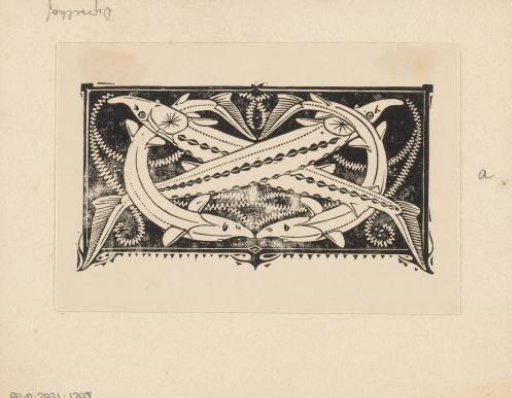
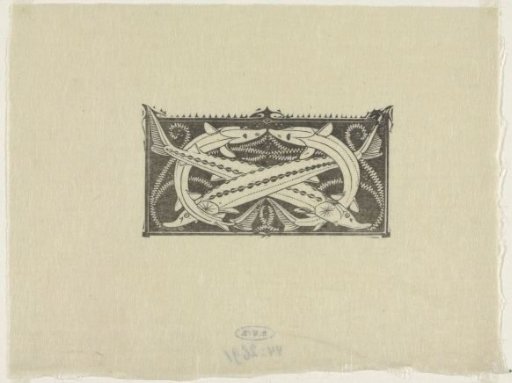
Headpiece with eels in 'Art and Society'
From the collection of Rijksmuseum, Amsterdam. Free to download, adapt and use — no permission needed.
About this work
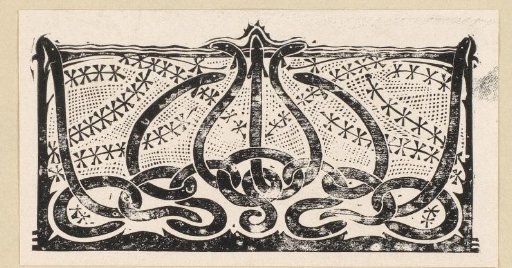
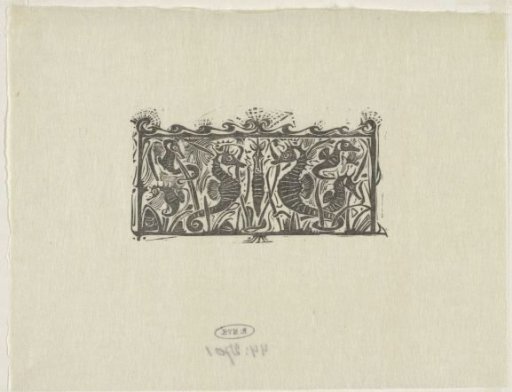
Dijsselhof – a very skilled woodcutter – is regarded as the father of Dutch Art Nouveau. This movement is characterized by symmetry, interlocking (repeating) forms and organic motifs with limited spatial suggestion. The Nieuwe Kunst can therefore be seen as the fertile soil in which Escher could take root. For both artists, fish were a very popular subject. Their form and flexibility offer the possibility of arriving at a decorative pattern.
Rijksmuseum, Amsterdam’s own descriptionSubjects
Credit lineKopvignet met palingen in 'Kunst en samenleving'. 1893. Gerrit Willem Dijsselhof. Rijksmuseum, Amsterdam. Public domain.