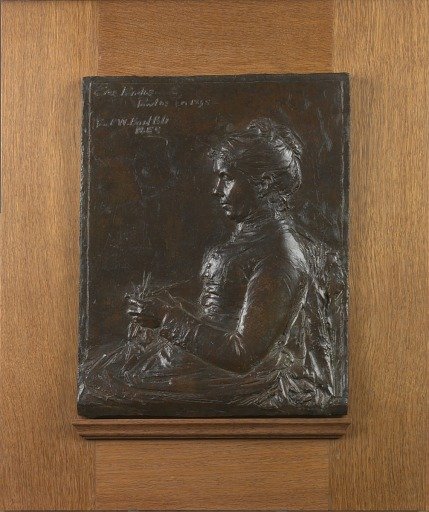
Woman Knitting
From the collection of Smithsonian American Art Museum. Free to download, adapt and use — no permission needed.
In the late nineteenth century, images of women knitting and working at spinning wheels alluded to American colonial life, popularly known as the age of homespun. Such scenes embodied nostalgia and patriotism in the midst of rapid technological changes. Although Paul Bartlett was living in France at the time he made this work, he maintained close ties to America throughout his career. Like his subject matter, the casting technique that Bartlett used was also enjoying a revival in popularity. Lost-wax casting, or cire perdue, involved casting the model with wax to reveal the smallest detail of the original. Bartlett set up a foundry in his studio in the 1890s to experiment with this method. Woman Knitting was modeled in 1885, but Bartlett did not cast it until ten years later and proudly inscribed the wax model, “Cire Perdue---Fondue en 1895.”
Smithsonian American Art Museum’s own description