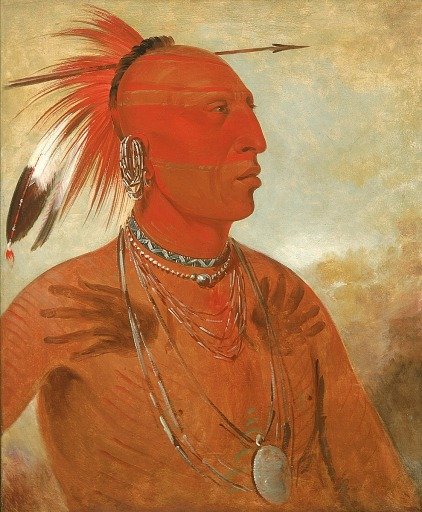
La-wáh-he-coots-la-sháw-no, Brave Chief, a Skidi (Wolf) Pawnee
From the collection of Smithsonian American Art Museum. Free to download, adapt and use — no permission needed.
“A very powerful and warlike nation, living on the river Platte, about one hundred miles from its junction with the Missouri; laying claim to, and exercising sway over, the whole country, from its mouth to the base of the Rocky Mountains. The present number of this tribe is ten or twelve thousand; about one half the number they had in 1832, when that most appalling disease, the small-pox, was accidentally introduced amongst them by the Fur Traders, and whiskey sellers; when ten thousand (or more) of them perished in the course of a few months . . . The Pawnees have ever been looked upon, as a very warlike and hostile tribe; and unusually so, since the calamity which I have mentioned.” George Catlin went on to describe Brave Chief as having “impressions of hands painted on his breast.” The artist probably painted this portrait at Fort Leavenworth (in today’s Kansas) in 1832. (Catlin, Letters and Notes, vol. 2, no. 34, 1841, reprint 1973; Truettner, The Natural Man Observed, 1979)
Smithsonian American Art Museum’s own descriptionSimilar works
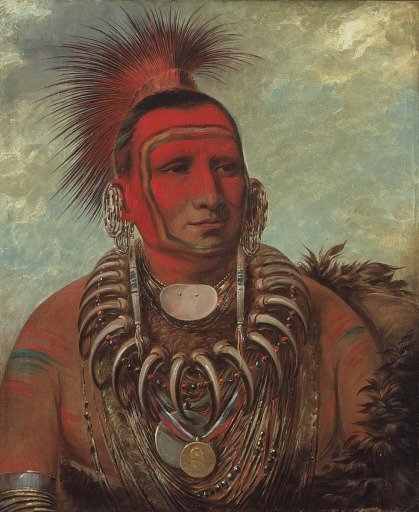 Shon-ta-yi-ga, Little Wolf, a Famous Warrior
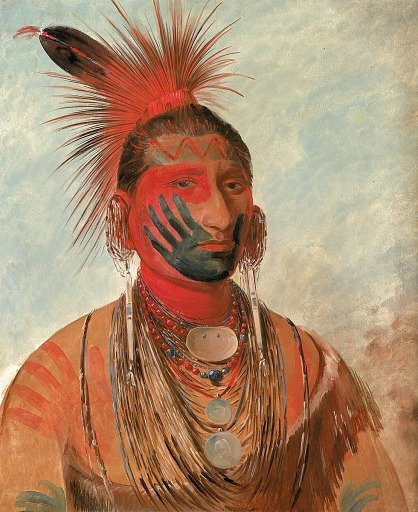 Wash-ka-mon-ya, Fast Dancer, a Warrior
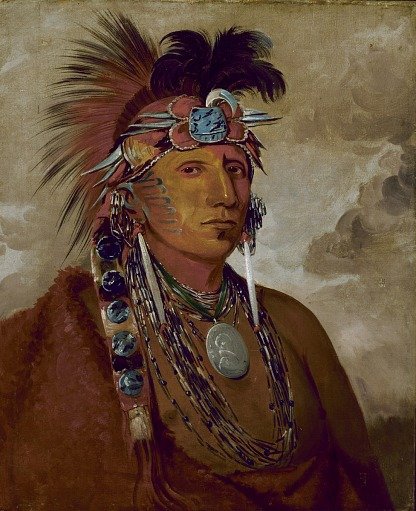 Shó-me-kós-see, The Wolf, a Chief
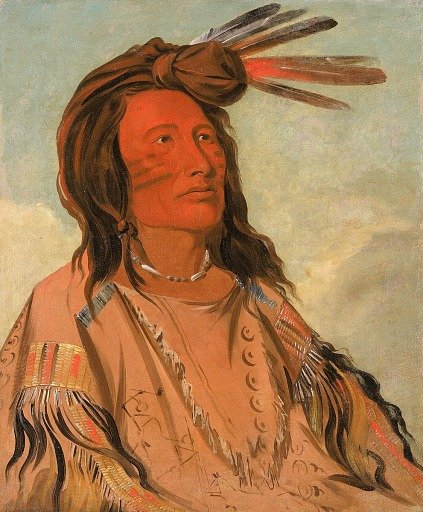 Tchán-dee, Tobacco, an Oglala Chief
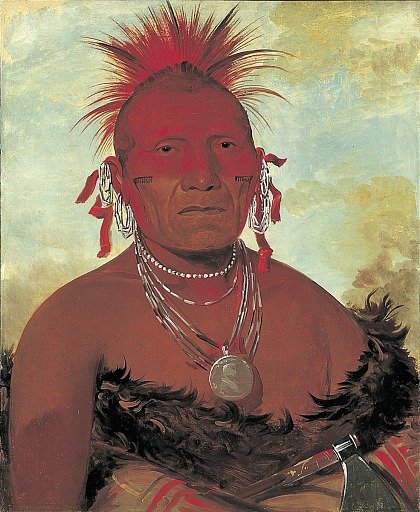 Shón-ka-ki-he-ga, Horse Chief, Grand Pawnee Head Chief
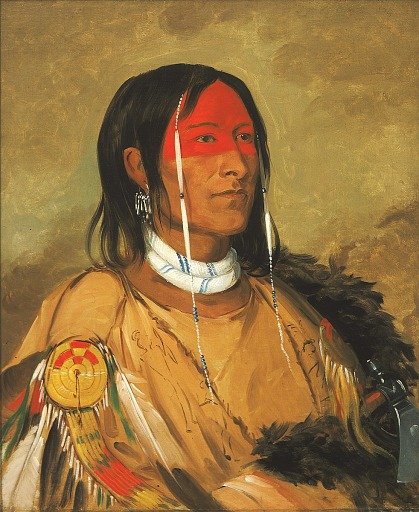 Eeh-tow-wées-ka-zeet, He Who Has Eyes Behind Him (also known as Broken Arm), a Foremost Brave