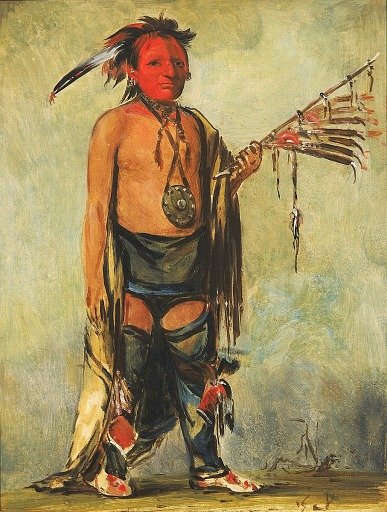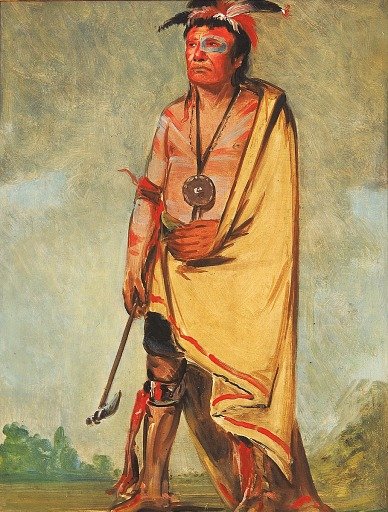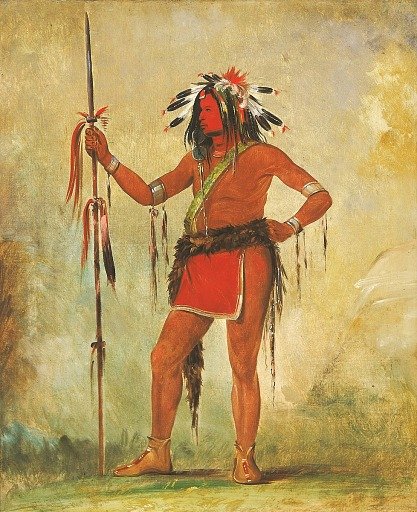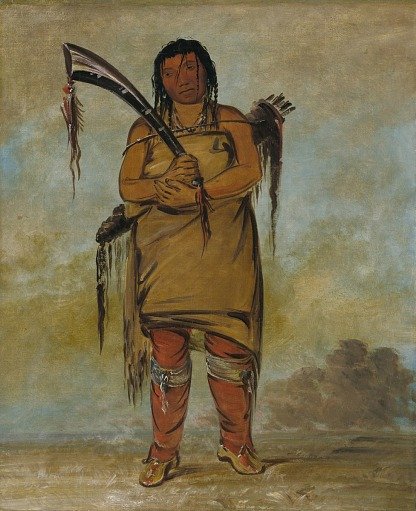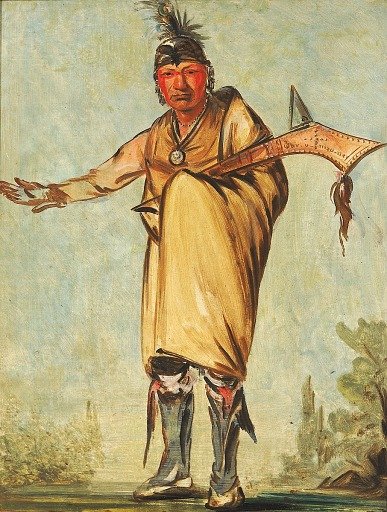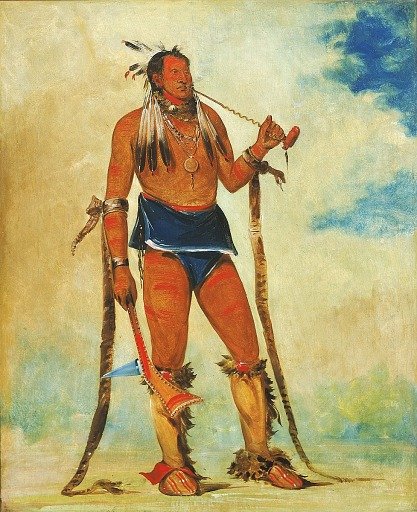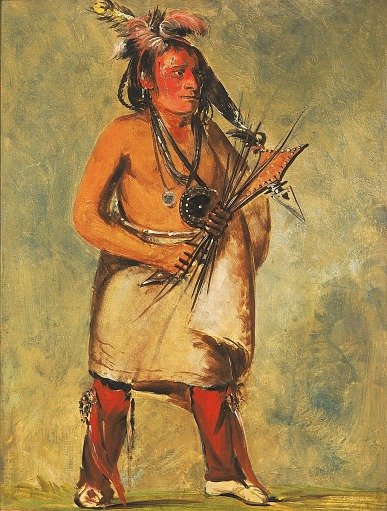
Wa-kon-chásh-kaw, He Who Comes on the Thunder
From the collection of Smithsonian American Art Museum. Free to download, adapt and use — no permission needed.
Before he began his extensive travels in the West, George Catlin found his first Indian subjects in the East. Nine members of a Winnebago delegation from present-day Wisconsin sat for him in Washington, D.C., in 1828. Catlin wrote that he had painted the portraits of “Won-de-tow-a (the wonder), Wa-kon-chash-kaw (he who comes on the thunder), Nau-naw-pay-ee (the soldier), Span-e-o-nee-kaw (the Spaniard) Hoo-wan-ee-kaw (the little elk), No-ah-choo-she-kaw (he who breaks the bushes), and Naugh-haigh-ke-kaw (he who moistens the wood), all distinguished men of the tribe; and all at full length, as they will be seen standing in my Collection.” (Catlin, Letters and Notes, vol. 2, no. 52, 1841; reprint 1973)
Smithsonian American Art Museum’s own description