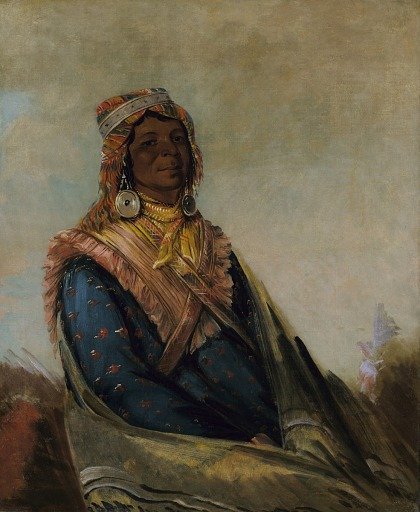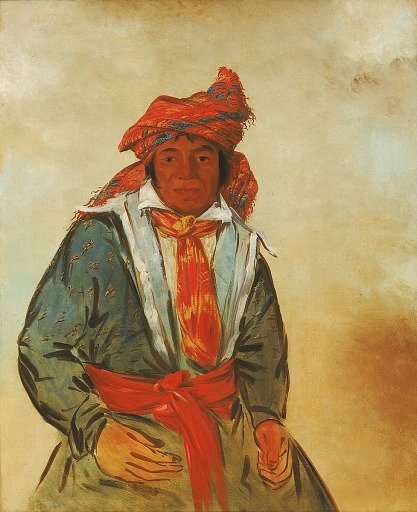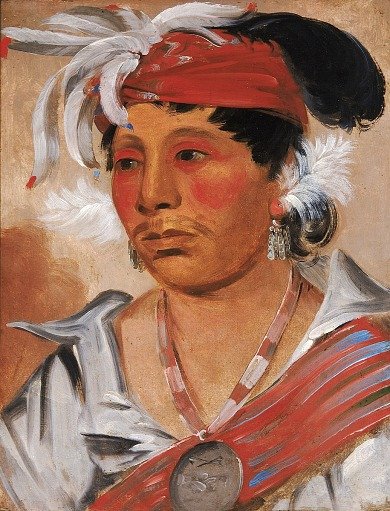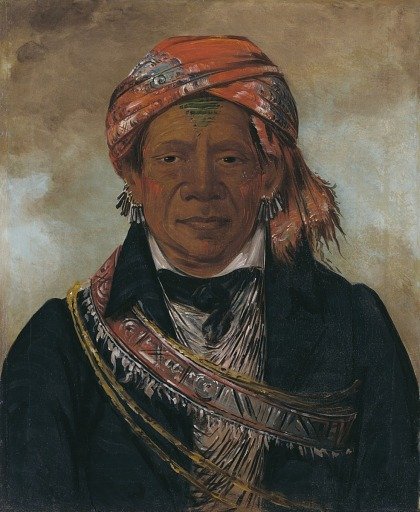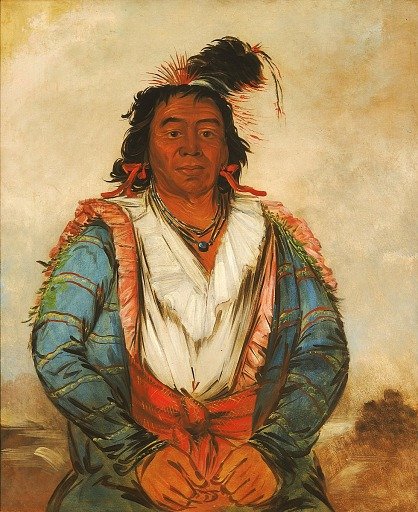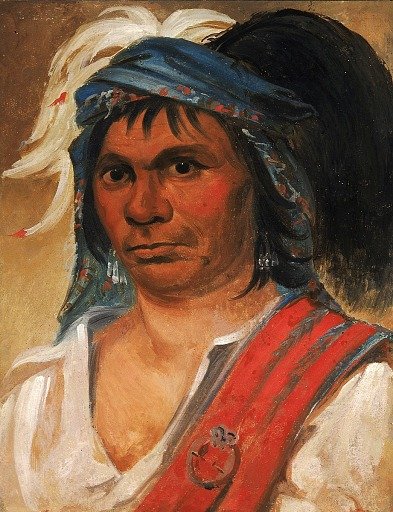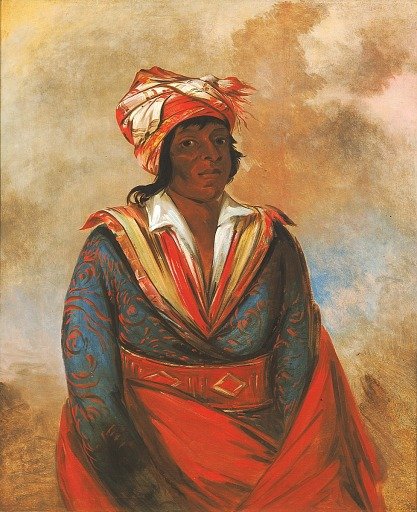
Kút-tee-o-túb-bee, How Did He Kill?, a Noted Brave
From the collection of Smithsonian American Art Museum. Free to download, adapt and use — no permission needed.
“[The Choctaw] seem, even in their troubles, to be happy; and have, like all the other remnants of tribes, preserved with great tenacity their different games, which it would seem they are everlastingly practicing for want of other occupations or amusements in life. Whilst I was staying at the Choctaw agency in the midst of their nation, it seemed to be a sort of season of amusements, a kind of holiday; when the whole tribe almost, were assembled around the establishment, and from day to day we were entertained with some games or feats that were exceedingly amusing: horse-racing, dancing, wrestling, foot-racing, and ball-playing, were amongst the most exciting; and of all the catalogue, the most beautiful, was decidedly that of ball-playing. This wonderful game, which is the favourite one amongst all the tribes, and with these Southern tribes played exactly the same, can never be appreciated by those who are not happy enough to see it.” George Catlin executed this portrait at Fort Gibson, Arkansas Territory, in 1834. (Catlin, Letters and Notes, vol. 2, no. 49, 1841; reprint 1973)
Smithsonian American Art Museum’s own description