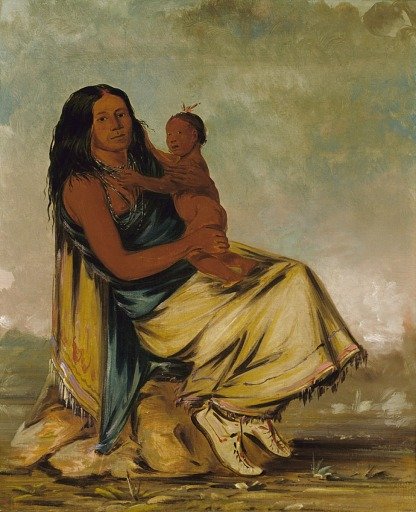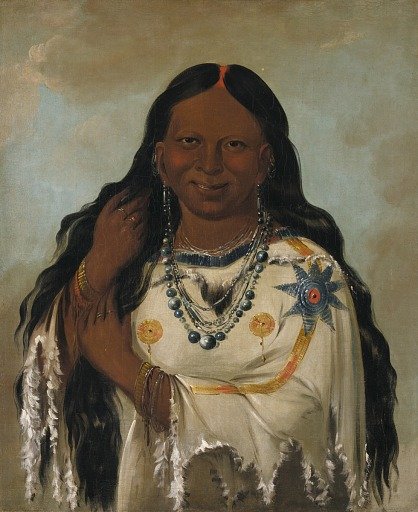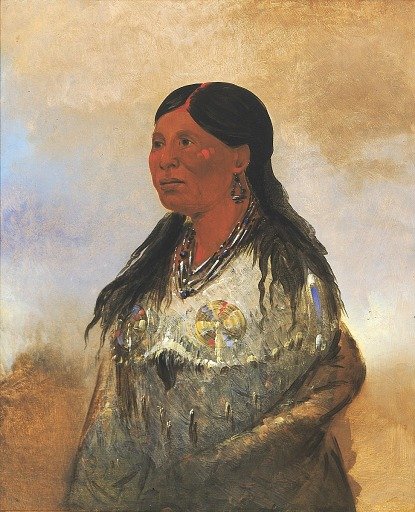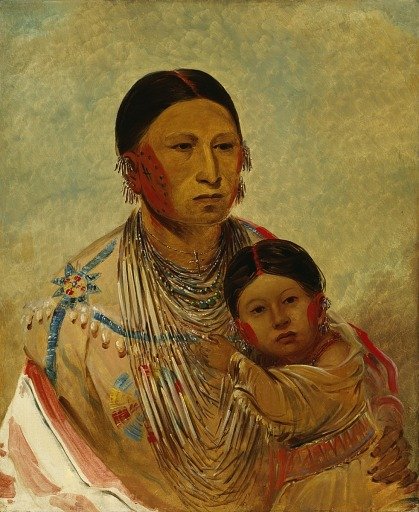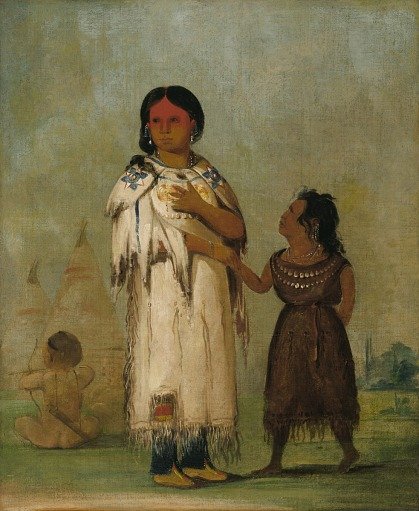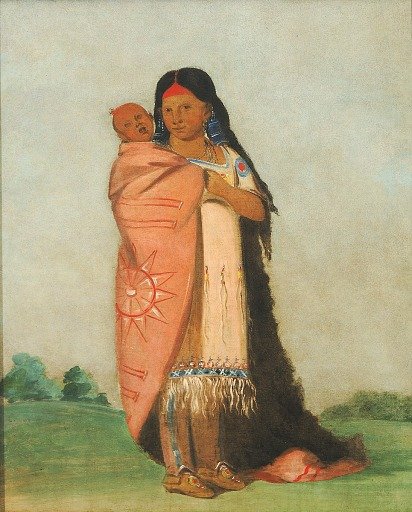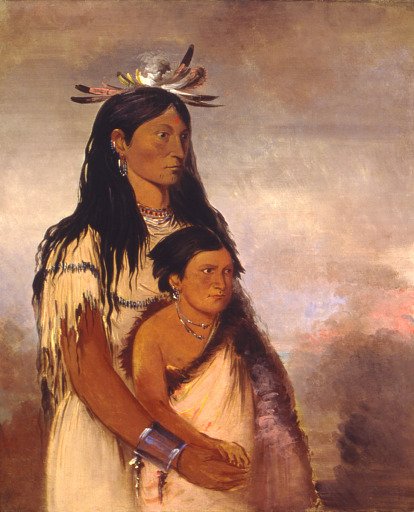
Túnk-aht-óh-ye, Thunderer, a Boy, and Wun-pán-to-mee, White Weasel, a Girl
From the collection of Smithsonian American Art Museum. Free to download, adapt and use — no permission needed.
George Catlin described this brother and sister as “two Kioways who were purchased from the Osages, to be taken to their tribe by the dragoons. The girl was taken the whole distance with us, on horseback, to the Pawnee village, and there delivered to her friends . . . The fine little boy was killed at the Fur Trader's house on the banks of the Verdigris, near Fort Gibson, the day after I painted his portrait, and only a few days before he was to have started with us on the march.” To counter certain myths about Indian relationships, Catlin often wrote of or painted family situations in which members were bound by ties of affection no different from those experienced by their white counterparts. Catlin painted the two children at at Fort Gibson (in present-day Oklahoma) in 1834. (Catlin, Letters and Notes, vol. 2, no. 43, 1841, reprint 1973; Truettner, The Natural Man Observed, 1979)
Smithsonian American Art Museum’s own description