Cleopatra
From the collection of Smithsonian American Art Museum. Free to download, adapt and use — no permission needed.
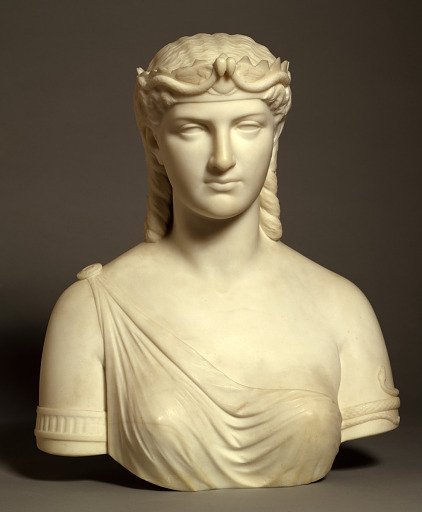
Cleopatra was one of many works that Margaret Foley completed while suffering symptoms of a brain illness. She completed the bust, along with an eight-foot fountain of three life-size children, for the Women’s Pavilion at the Philadelphia Centennial Exposition of 1876. Cleopatra has been portrayed in literature as an ambitious queen and seducer of powerful men. Her passionate love affair with the Roman general Mark Antony is the basis for one of Shakespeare’s famous plays. The twinned snakes in Cleopatra’s crown evoke the kingdoms of Egypt as well as the queen’s manner of death. Rather than being taken prisoner, Cleopatra chose suicide, dying from the bite of a poisonous snake. Perhaps Foley was making a professional statement when she sculpted Cleopatra: the strong features and forceful gaze suggest the artist’s confidence in the power of women in a man’s world.
Smithsonian American Art Museum’s own description