CC0 · no rights reserved
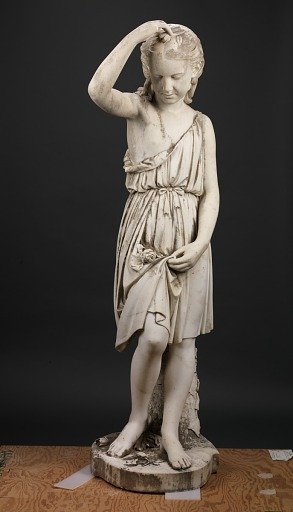
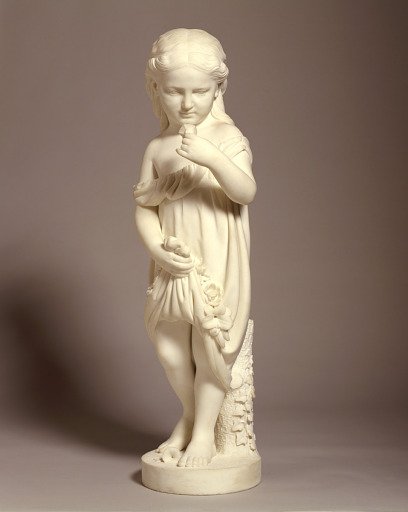
Morning Glory
From the collection of Smithsonian American Art Museum. Free to download, adapt and use — no permission needed.
About this work
Nineteenth-century artists often created images of children to evoke innocence and virtue, ideals that were particularly important after the Civil War, when the nation seemed to have lost its innocence. Joel Tanner Hart created this sculpture after seeing a young girl absorbed in collecting morning glories in the folds of her dress. The roses and lilies, even the white marble itself, symbolize the girl's purity, while the morning glory represents the fleeting nature of childhood.
Smithsonian American Art Museum’s own descriptionSubjects
Credit lineMorning Glory. modeled ca. 1868, carved 1872. Joel Tanner Hart, born Winchester, KY 1810-died Florence, Italy 1877. Smithsonian American Art Museum, Smithsonian American Art Museum, Museum purchase. CC0.