Lady Macbeth
From the collection of Smithsonian American Art Museum. Free to download, adapt and use — no permission needed.
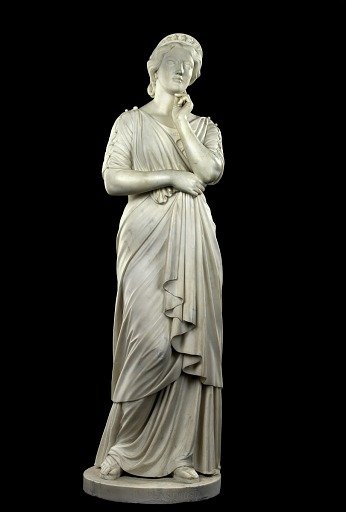
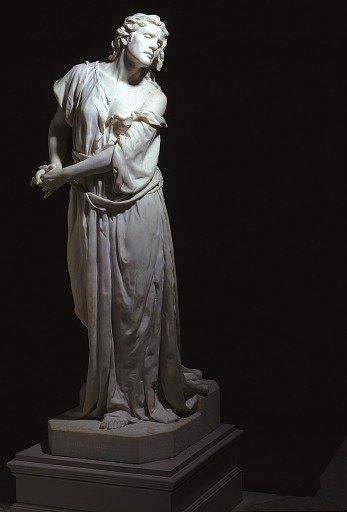
Elisabet Ney's Lady Macbeth is both a dramatic portrayal of a famous Shakespearean character and a self-portrait. This sculpture, completed two years before Ney died, suggests the remorse and guilt the artist felt about her relationship with her estranged son, Lorne. Ney sympathized with Lady Macbeth because they were both strong women who did not submit to the conventions of their times. In act 5, scene 1 of Shakespeare's tragedy the scheming queen is sleepwalking, a tortured soul whose contradictions are represented by the sharp diagonals of her clothes, her deeply furrowed brow, and the strained left arm that reaches across her body. Lady Macbeth dreams that a spot of blood has fallen on her hand, and no matter how many times she washes it, the "damned spot" will not come out. Although hardly the conspirator that Lady Macbeth was, Ney related to her subject's internal conflict. As an adolescent, Lorne had stopped speaking to his mother and had moved out of his parents' home. He felt his mother was too controlling and did not understand him because she made him dress in togas and would not let him play with children his own age. She held herself responsible for the loss of her son and expressed her grief through the sculpture of Lady Macbeth.
Smithsonian American Art Museum’s own description