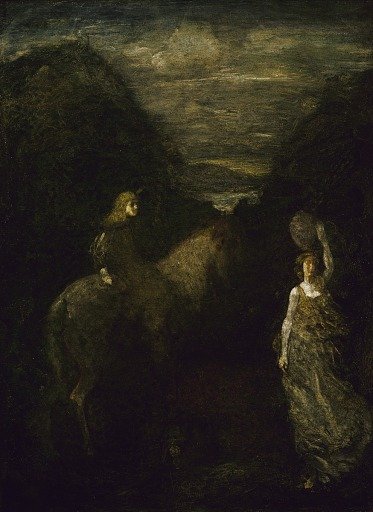
King Cophetua and the Beggar Maid
From the collection of Smithsonian American Art Museum. Free to download, adapt and use — no permission needed.
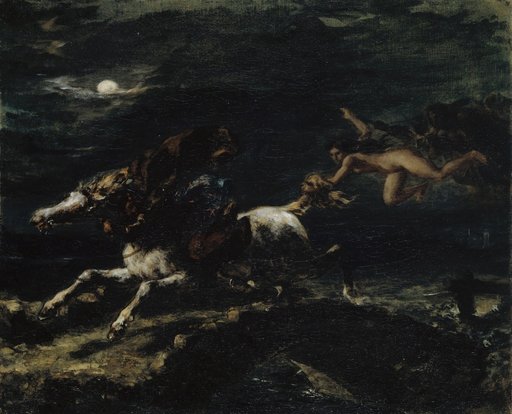
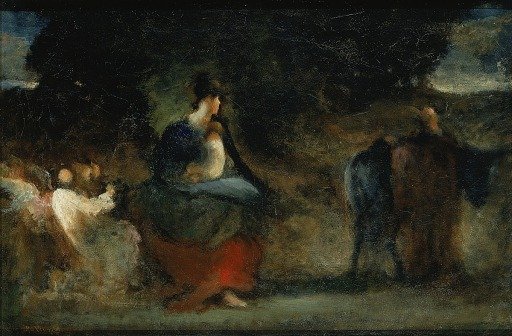
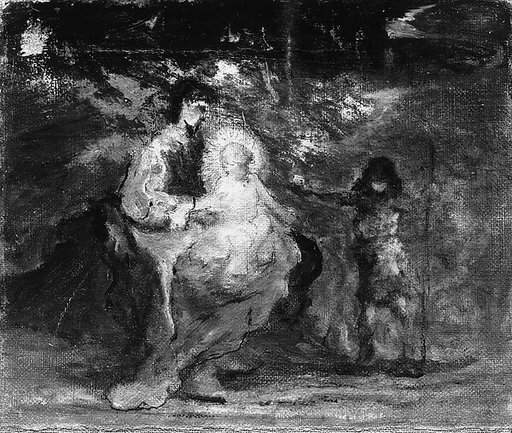
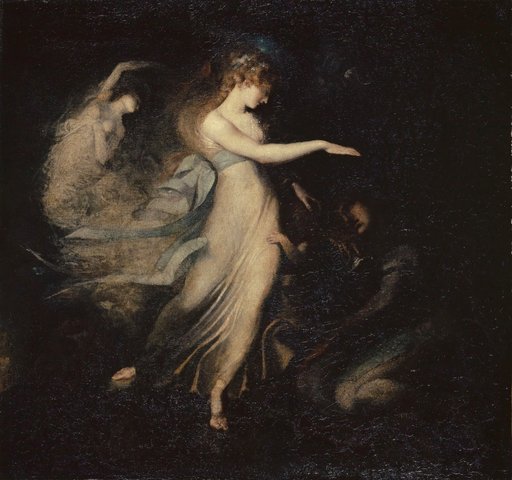
King Cophetua and the Beggar Maid may have been commissioned by the art collector John Gellatly, who was an enthusiastic supporter of contemporary American art around the turn of the twentieth century. Albert Pinkham Ryder worked on this painting for more than five years, and x-rays of the canvas show that it was painted over two other images. Ryder was inspired by the story of King Cophetua from an Elizabethan ballad that tells of love overcoming all odds. In the tale, a king of Africa falls in love with a beautiful young beggar maid and marries her, despite her lowly status. Ryder was a hopeless romantic and believed wholeheartedly in love at first sight. In this painting he chose the scene when the king first notices the young girl to show that people’s lives could change in just one moment. (Broun, Albert Pinkham Ryder, 1989)
Smithsonian American Art Museum’s own description