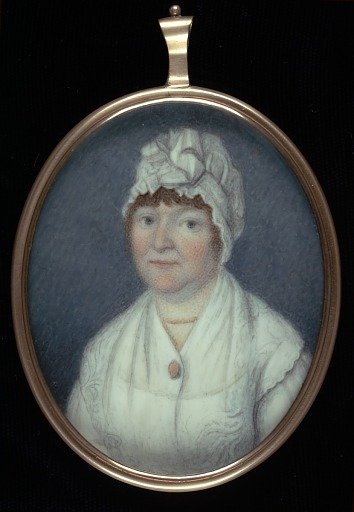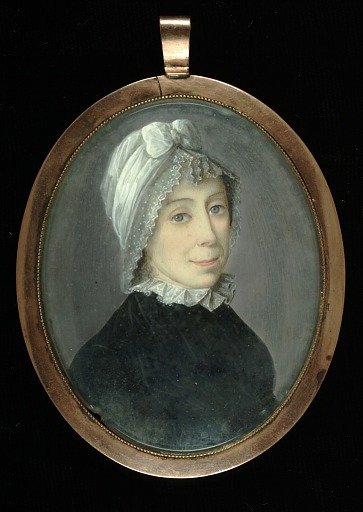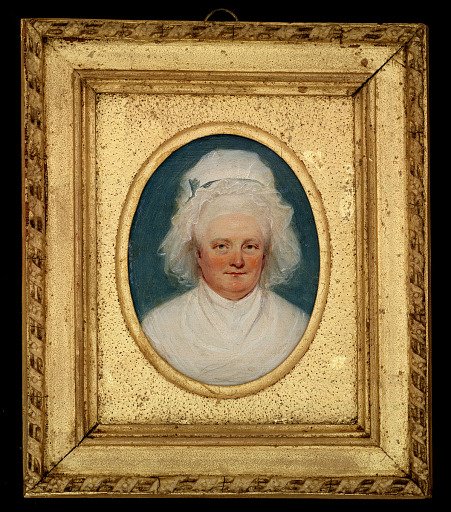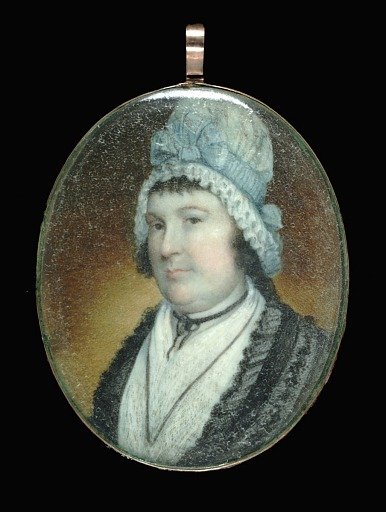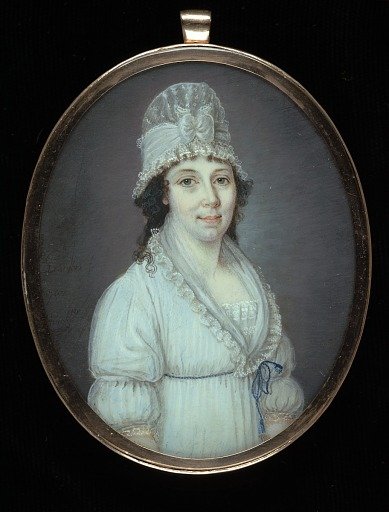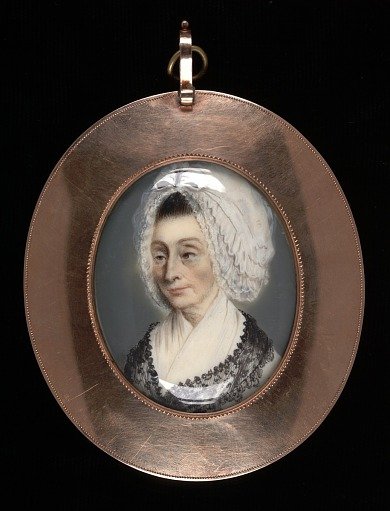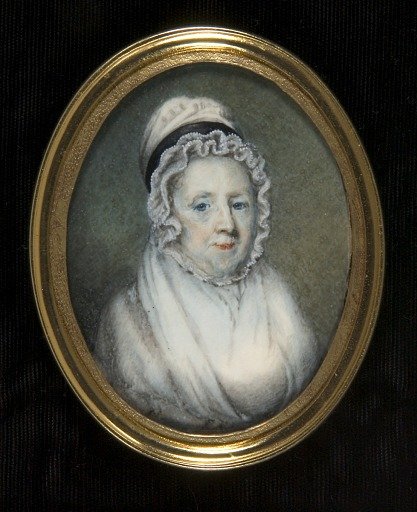
Miss Lettie Stanley
From the collection of Smithsonian American Art Museum. Free to download, adapt and use — no permission needed.
It is not always possible to identify the sitter in a miniature portrait, and research is still being done on some of the works in the Museum’s collection. Miniatures became popular in England during the early 1700s, commissioned by wealthy families on the occasions of births, engagements, weddings, and bereavements. These paintings, elaborately set into lockets or brooches, provided the wearer with a sentimental connection to a loved one. The back of the miniature often revealed a lock of the sitter’s hair, symbolizing affection, commitment, or loss. The daguerreotype, invented in 1839, provided a cheaper, faster alternative, and portrait miniatures grew less popular. At the turn of the twentieth century, with the establishment of the American Society of Miniature Painters, miniatures enjoyed a brief revival. Conservation of this miniature was made possible through a generous grant provided by the Smithsonian Women’s Committee.
Smithsonian American Art Museum’s own description