Altarpiece
From the collection of Smithsonian American Art Museum. Free to download, adapt and use — no permission needed.
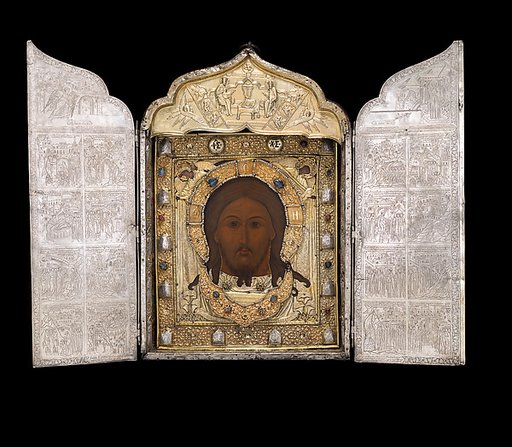
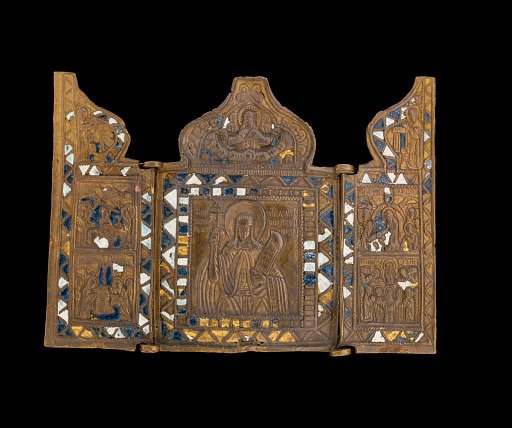
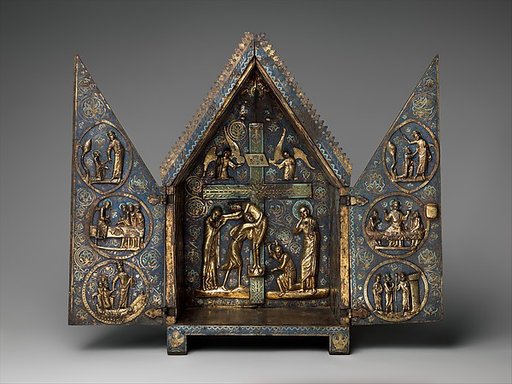
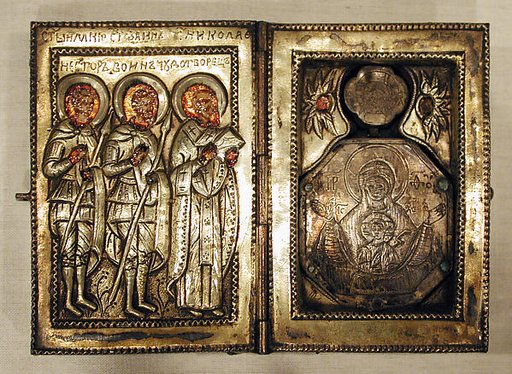
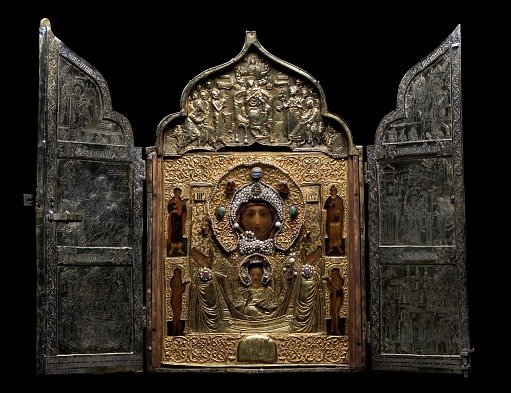
This triptych is a form of Russian icon made during the twelfth century AD. In the tenth century, Russia was converted to Orthodox Christianity under the rule of Prince Vladimir of Kiev. He ordered all pagan images to be destroyed and built many grand churches in an attempt to win his people over to the new religion. To fill these churches, he imported Byzantine icons and furnishings, and Russian artists soon began to copy their rich, ornate forms. This piece was built in three wooden panels, decorated with pearls and precious stones. The intricate topmost layer of gold has been cut away to reveal the paintings on the wood below. The center panel shows the Virgin Mary and Christ, each surrounded by a jewel-encrusted halo. The two side panels depict scenes from the life of Mary and Jesus, edged by a pattern of acanthus leaves. Altarpieces are not used in Orthodox churches, therefore it is likely that this triptych was used for private veneration, in a home, monastic cell or on a wealthy Russian's travels.
Smithsonian American Art Museum’s own description