Mask
From the collection of Smithsonian American Art Museum. Free to download, adapt and use — no permission needed.
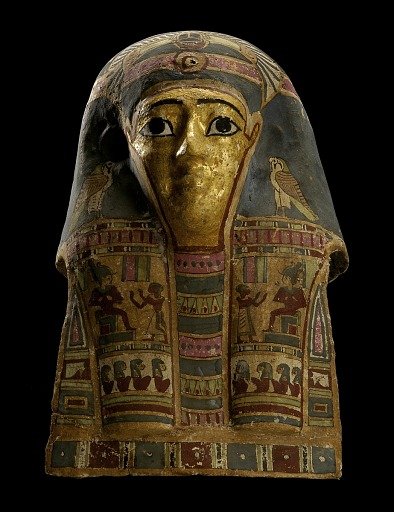
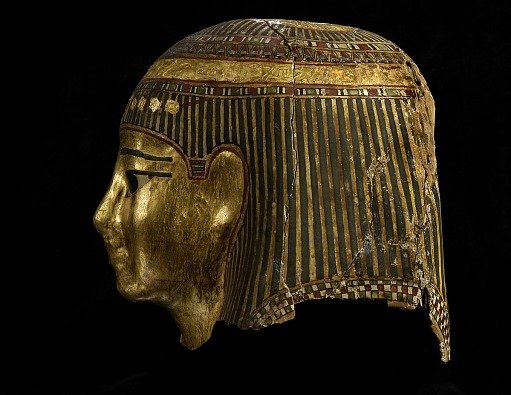
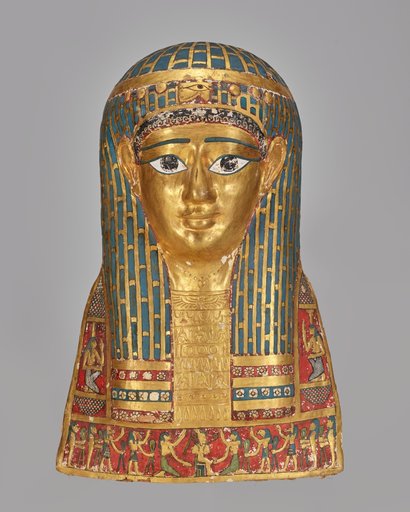
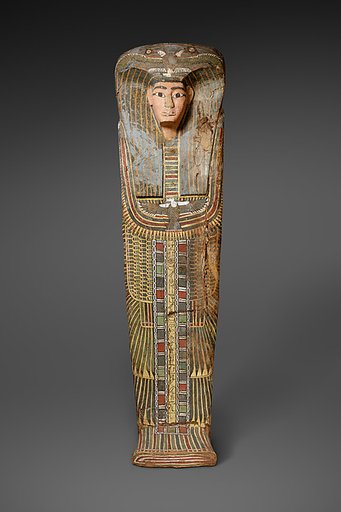
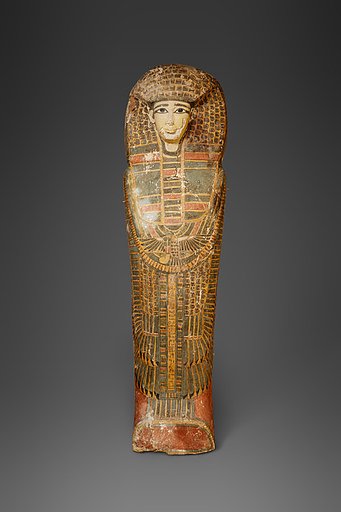
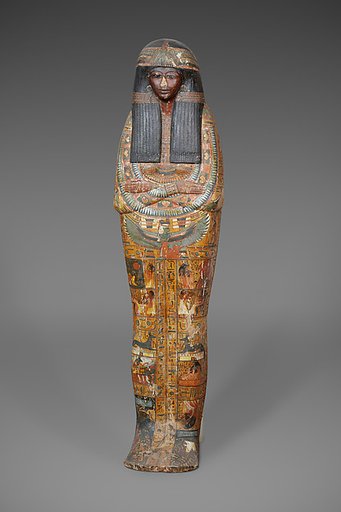
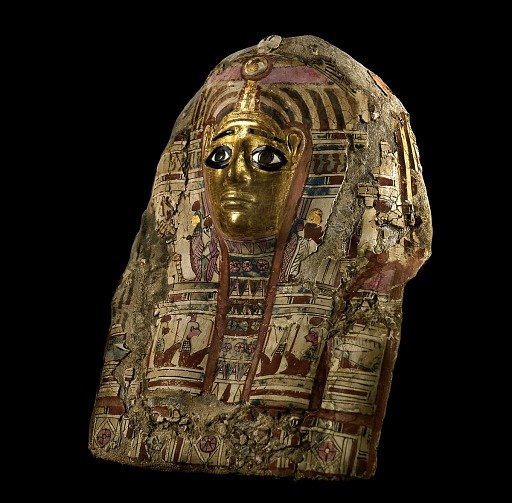
Mummy masks were part of an elaborate burial ritual in ancient Egypt dating back thousands of years. The Egyptians believed that death was an interruption, rather than an end to life, and as a result they took many precautions to ensure the deceased was welcomed in the afterlife. Bodies were prepared to receive the ba, or spirit, and a mask would be placed over the head and shoulders of the mummy so that the spirit could recognize its host. The mask did not present a portrait of the individual, but instead showed a youthful, idealized image of what he or she would look like in the next world. The mummy and mask were then placed in a series of painted wooden coffins and surrounded by food, tools, and gifts. The masks were made from linen and plaster, and painted with images of the gods and spells to protect the body. Many masks were gilded to symbolize divinity, because the sun god Ra was believed to have a body of pure gold.
Smithsonian American Art Museum’s own description