Mosaic Glass Patella Cup
From the collection of Smithsonian American Art Museum. Free to download, adapt and use — no permission needed.
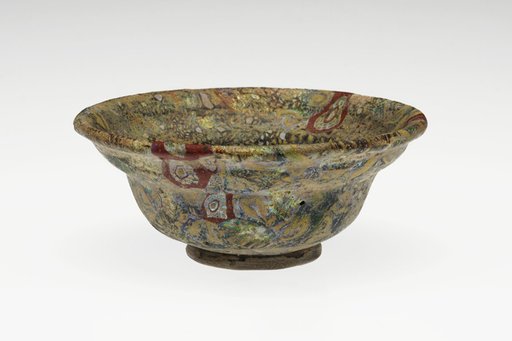
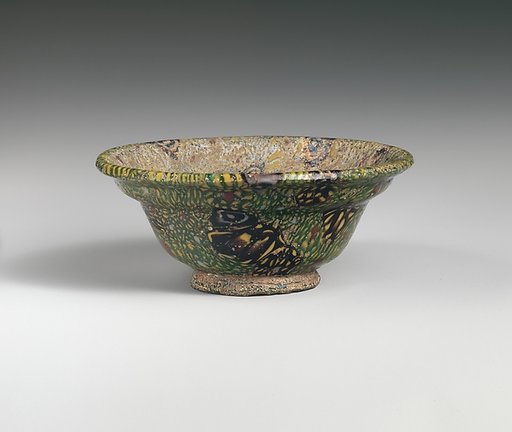
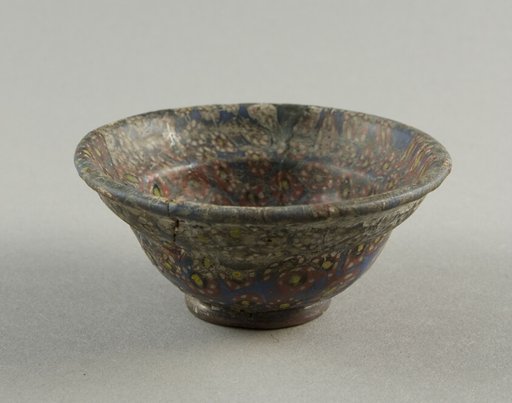
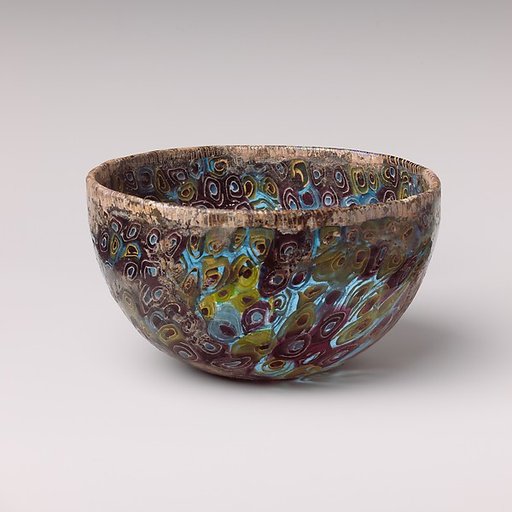
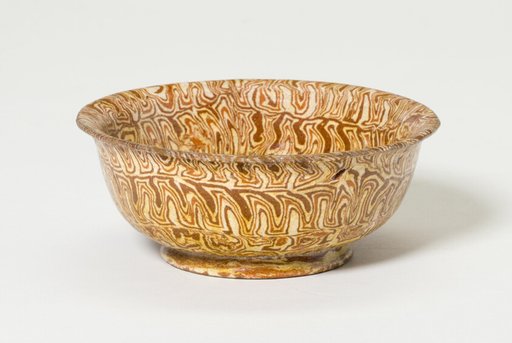
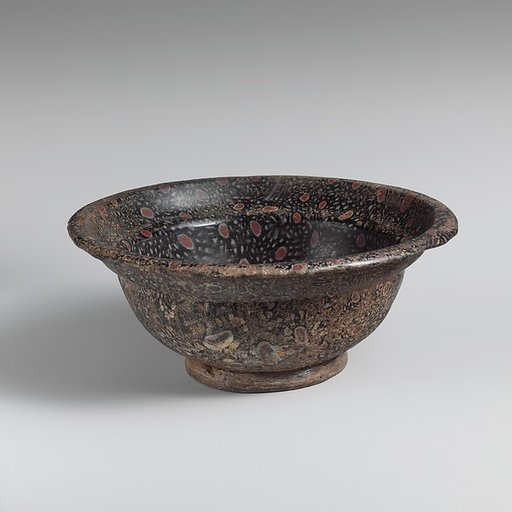
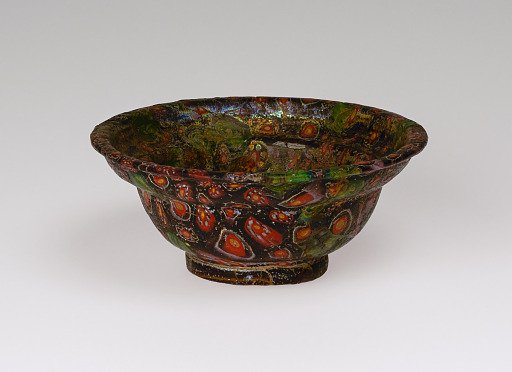
Ancient Roman glassmakers invented the decorative technique now commonly known as mosaic glass, seen in this bowl. The first steps in this process are arranging thin threads of glass of varying colors into a long bundle, then fusing these into a single rod. The resulting cane is then sliced into thin discs, and each will bear the same pattern, perhaps a flower design or concentric circles in the shape of an eye. As seen here, the cane slices can then be reworked into a vessel with this pattern repeated across the surface. Mosaic glass fell out of favor until the nineteenth century, when Muranese glassmakers studied ancient vessels and began to make replicas, striving to rival the achievements of their Italian ancestors.
Smithsonian American Art Museum’s own description