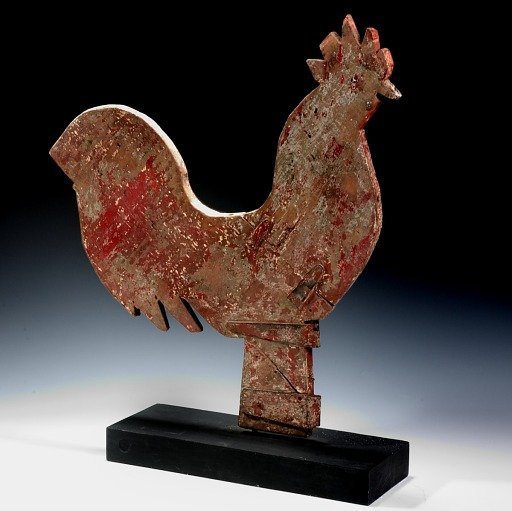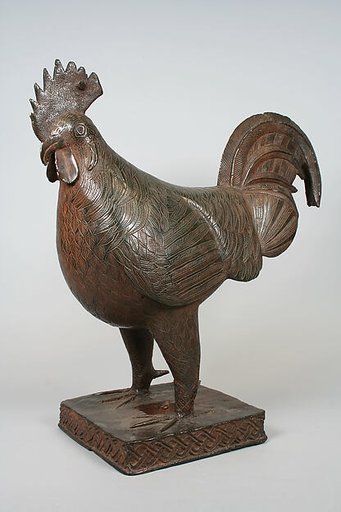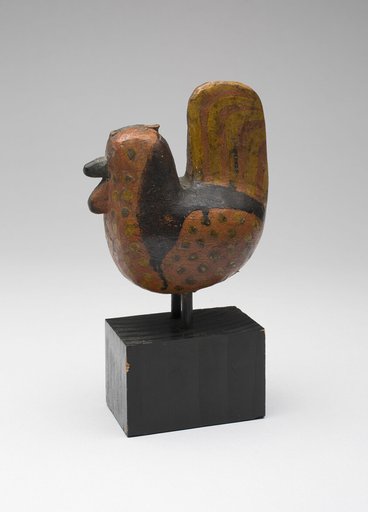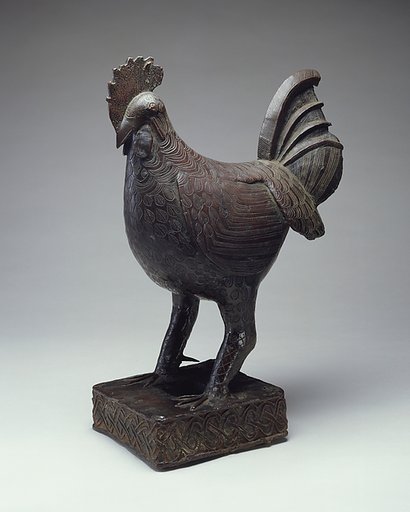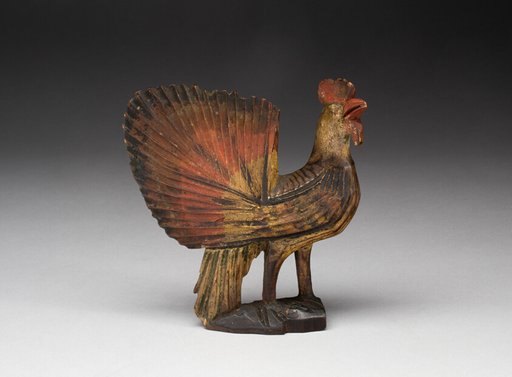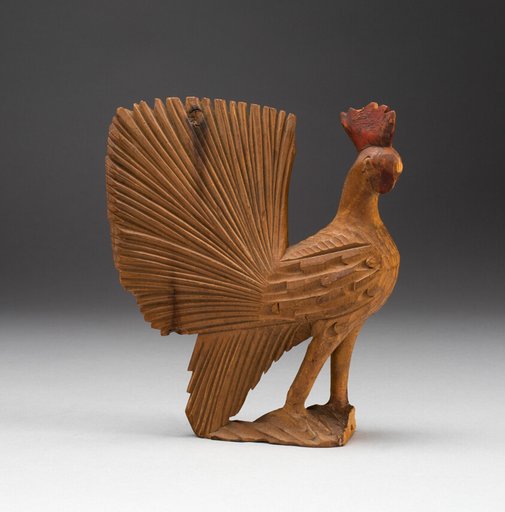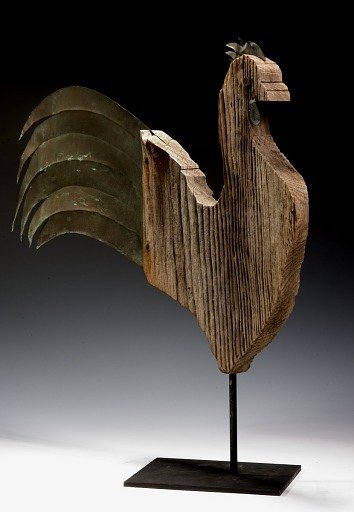
Rooster Weathervane
From the collection of Smithsonian American Art Museum. Free to download, adapt and use — no permission needed.
The first known weather vane sat on top of the Tower of the Winds in Athens during the first century BC. The rooster weather vane, or weathercock, appeared a thousand years later when a papal edict announced that every church must carry the symbol of a rooster. This was to remind the faithful of Peter’s betrayal of Jesus, who said that the cock would not crow until Peter had denied him three times. In the nineteenth century, people made weather vanes showing everyday activities. Horses represented transportation, sport, and social status, and many craftsmen made weather vanes of record-winning racehorses. (Charles Klamkin, Weather Vanes, 1973)
Smithsonian American Art Museum’s own description