CC0 · no rights reserved
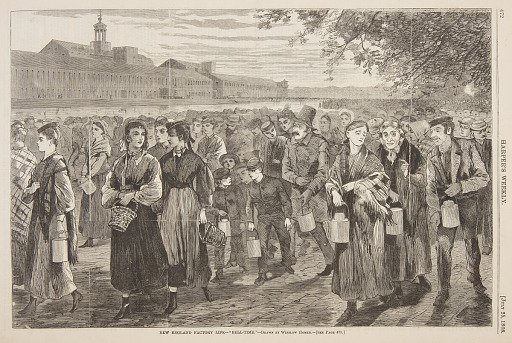
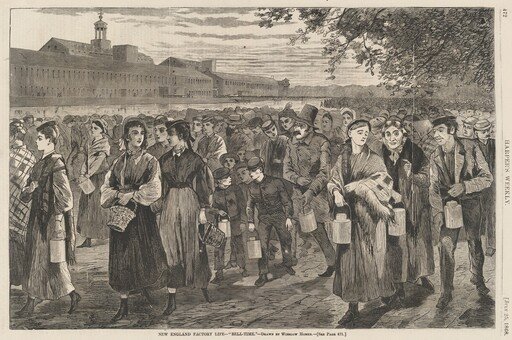
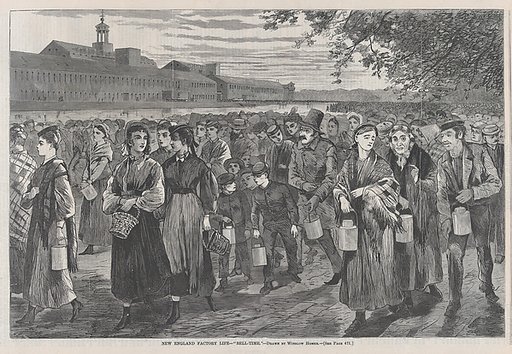
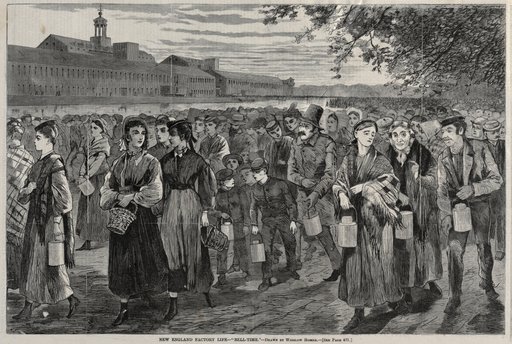
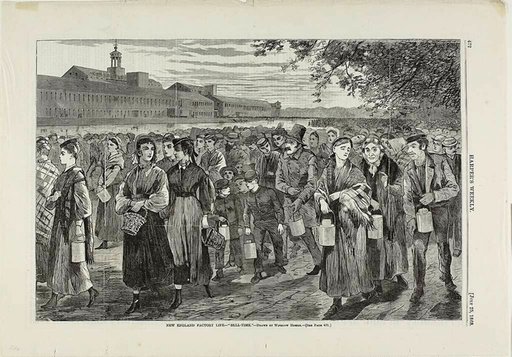
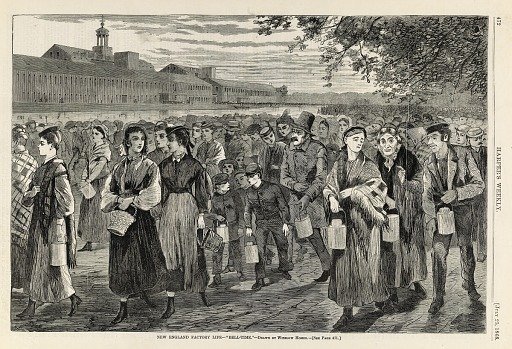
New England Factory Life--"Bell-Time", from Harper's Weekly, July 25,1868
From the collection of Smithsonian American Art Museum. Free to download, adapt and use — no permission needed.
About this work
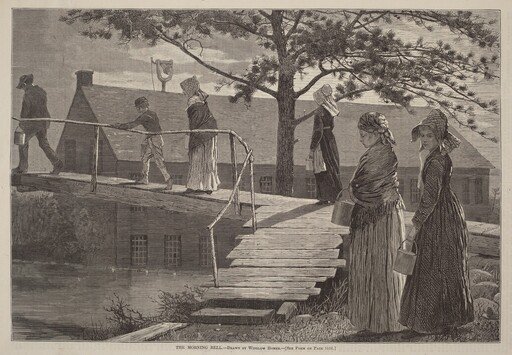
In 1868, Winslow Homer took up the subject of people who worked in textile mills. Mill operatives’ activities were organized by bells that rang throughout the day. Before mid-century, Americans viewed factories as places where respectable folk—mostly women—could earn a decent income and make a contribution to the nation’s industrial transformation. By the time Homer created his picture, native-born farmwives and their daughters had long been absent from the mills. Recent immigrants and the desperately poor replaced them at the looms, the only takers for work that offered the barest sustenance.
Smithsonian American Art Museum’s own descriptionSubjects
Credit lineNew England Factory Life--"Bell-Time", from Harper's Weekly, July 25,1868. 1868. Winslow Homer, born Boston, MA 1836-died Prout's Neck, ME 1910. Smithsonian American Art Museum, Smithsonian American Art Museum, The Ray Austrian Collection, gift of Beatrice L. Austrian, Caryl A. Austrian and James A. Austrian. CC0.