Fish Decoy
From the collection of Smithsonian American Art Museum. Free to download, adapt and use — no permission needed.
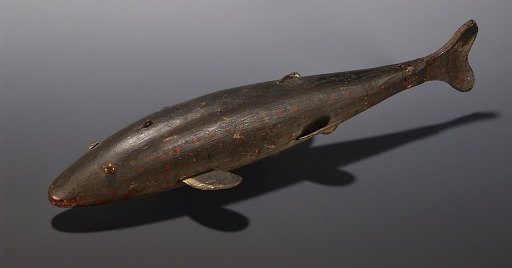
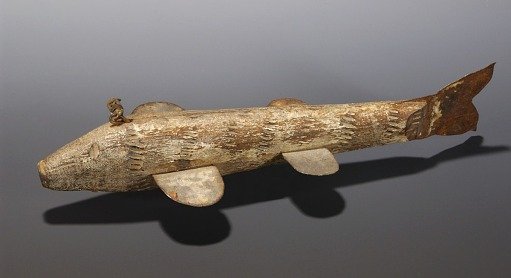
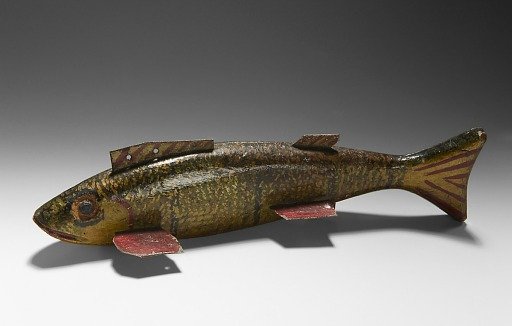
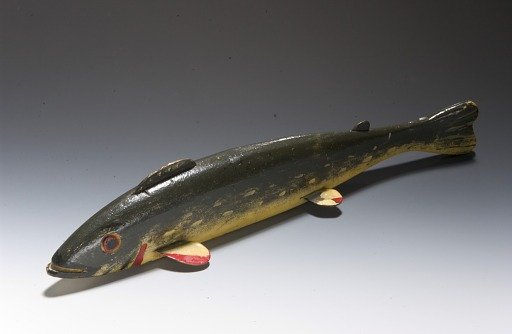
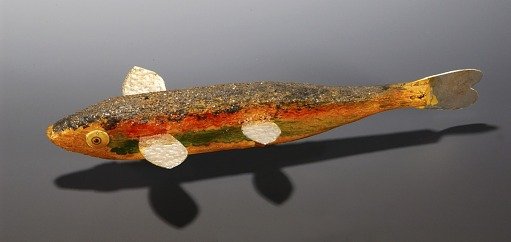
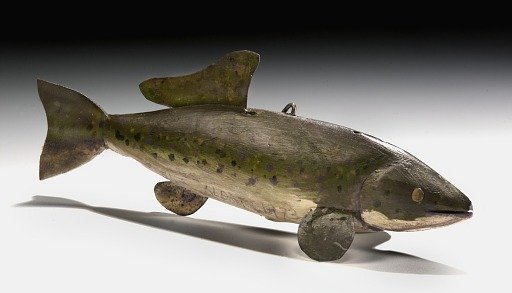
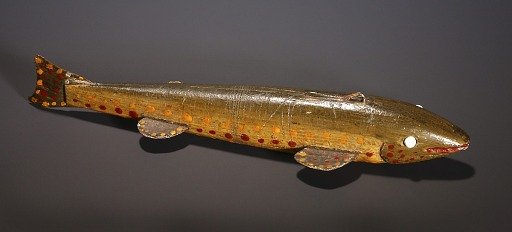
Carved fish decoys are one of the earliest forms of American folk art. Hunters around the Bering Sea first used small bone or ivory decoys for ice fishing around 1000 AD. They believed that the decoys embodied the innua, or inner spirit of the fish. The practice spread to upstate New York and the Great Lakes, where it became a tourist industry with many communities growing around prime fishing areas. Ice fishing was banned in 1905, however, because the popularity of the sport had brought about a serious decline in large game fish. During the Depression, many hunters and fishermen turned again to fish spearing for survival. The decoys from this period are simpler, focusing on realistic shapes, colors, and movement rather than fanciful decoration (Steven Michaan, American Fish Decoys, 2003).
Smithsonian American Art Museum’s own description