Prairie Chicken
From the collection of Smithsonian American Art Museum. Free to download, adapt and use — no permission needed.
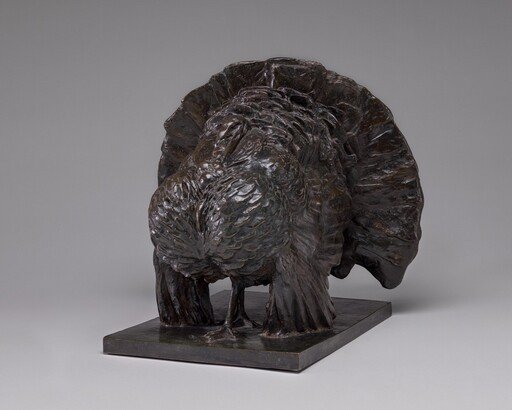
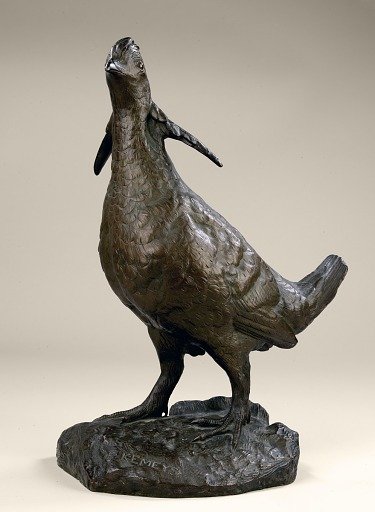
In the 1860s and 1870s, prairie chicken leks, or breeding grounds, were a common sight across the Midwest. As more settlers moved westward, however, farmers converted tall-grass prairie to cropland. Edward Kemeys's sculpting career began just before prairie chicken populations shrank from habitat loss. Here he preserves and celebrates the male of the species by accurately depicting the bird's form, paying particular attention to the characteristic eyebrow texture and long pointed neck feathers, called pinnae. Kemeys also took care when modeling the bird's posture. The angled pinnae show this male poised for display or attack.
Smithsonian American Art Museum’s own description