Nathan Hale
From the collection of Smithsonian American Art Museum. Free to download, adapt and use — no permission needed.
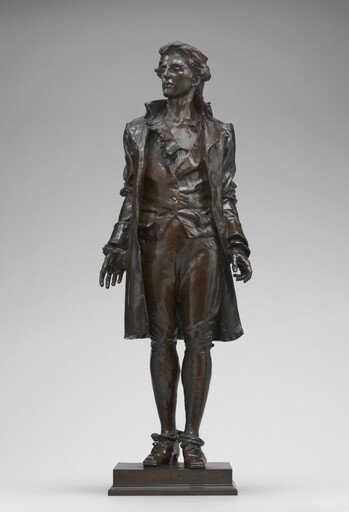
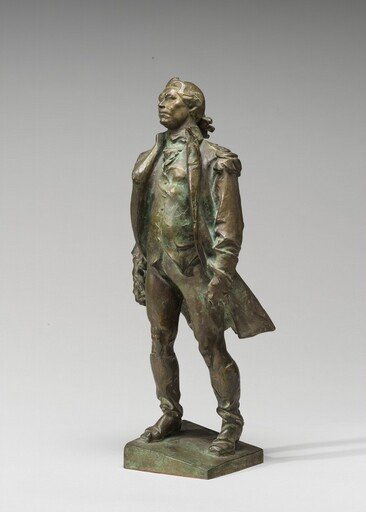
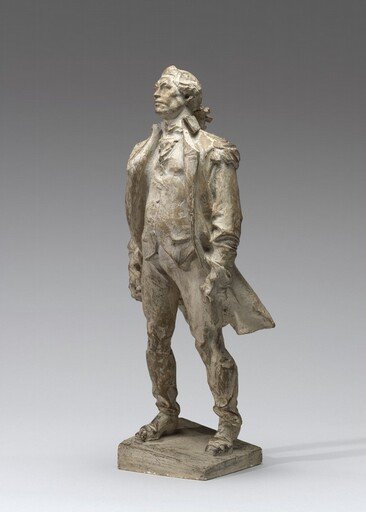
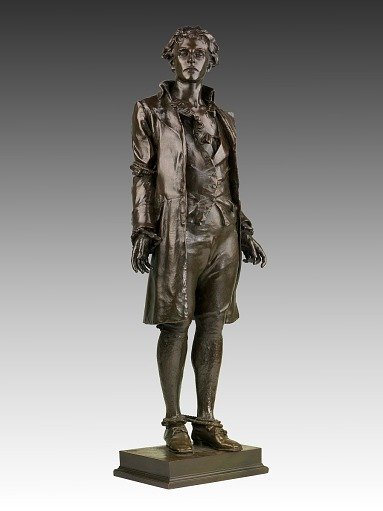
Nathan Hale (1755–1776), a teacher from Connecticut, fought for the Continental Army during the Revolutionary War. The British hanged the twenty-one-year-old soldier as a spy after he had infiltrated their lines in New York. Just before his death, Hale allegedly uttered the now famous words: "I only regret that I have but one life to lose for my country." Frederick MacMonnies portrayed Hale as a young American martyr. He stands with his shoulders thrust back and his head lifted slightly, even though his feet and arms are bound with rope. The sculpture’s rough surface and lack of finish originally drew criticism but reflected MacMonnies's formal training at the École des Beaux-Arts in Paris. His original nine-foot-high bronze sculpture of Hale was erected at City Hall Park in New York in 1893, where it stands today. This smaller sculpture is one of several models that MacMonnies produced.
Smithsonian American Art Museum’s own description