The Odyssey in art: the story scene by scene
Homer's poem told through etchings, engravings and paintings from museum collections. Every work on this page is public domain and free to download.
29 July 2026
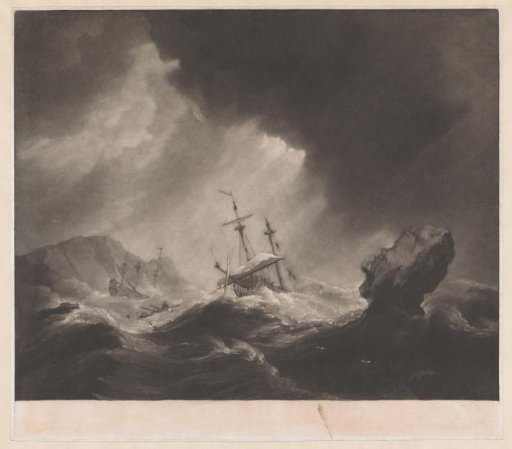
Christopher Nolan's The Odyssey has brought Odysseus back to cinemas. The poem behind the film is roughly 2,700 years old and about 12,000 lines long: the story of a man who leaves the Trojan War expecting a voyage of a few weeks and takes ten years to reach his wife. This page tells that story in order, scene by scene, through works held in museum and archive collections and indexed on Arkivism. Each one can be downloaded and used for anything, free, with no permission needed.
Most of the etchings here come from a single series made in 1633, copies of a set of frescoes that no longer exist. The story of how they were made, and what happened to the paintings they copied, is at the end of the page.
The Trojan Horse
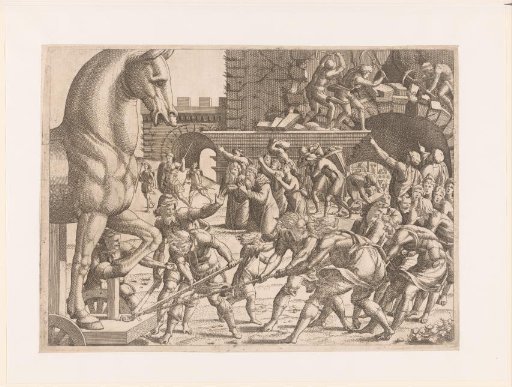
After ten years of siege the Greeks have got nowhere. Odysseus devises a hollow wooden horse, hides soldiers inside it, and the rest of the fleet sails out of sight so the horse reads as a parting gift. The Trojans haul it through their own gates as a trophy, ignoring a priest and a prophetess who both warn them against it. That night the soldiers climb out and open the gates from the inside. Troy falls, and Odysseus sets sail for Ithaca with twelve ships, expecting the journey home to be short.
The Lotus-Eaters
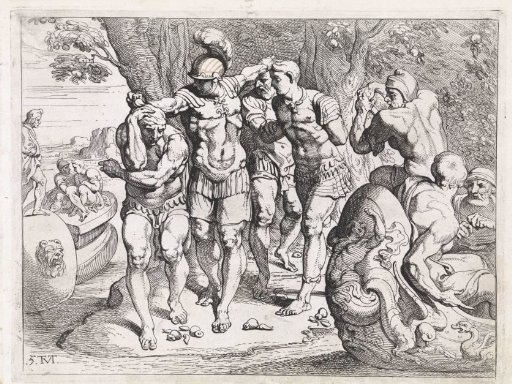
A raid at Ismarus and days of bad weather have already cost Odysseus men and time when they reach the Lotus-eaters. The islanders offer no violence at all. They simply share their food, and any man who tastes the lotus loses the wish to leave: no memory of home, no desire to sail, nothing but the want of more. Odysseus loses nobody here, and it is still one of the most dangerous stops of the voyage. He drags the affected men back aboard in tears, binds them beneath the benches and orders the ships away.
Polyphemus the Cyclops
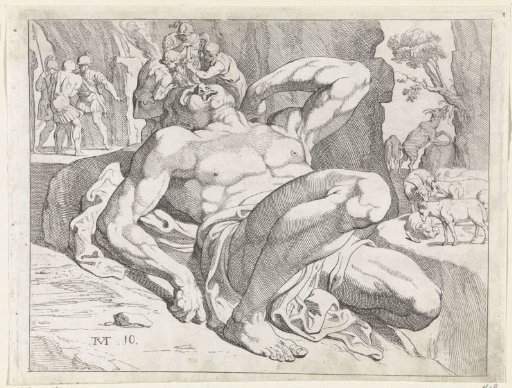
Polyphemus traps the men in his cave and devours six of them. Odysseus tells him his name is Nobody, gets him drunk and blinds him with a heated stake. When the other Cyclopes come running and ask who is hurting him, Polyphemus can only answer that Nobody is, and they leave. The survivors escape the cave slung beneath his sheep.
Poseidon's curse
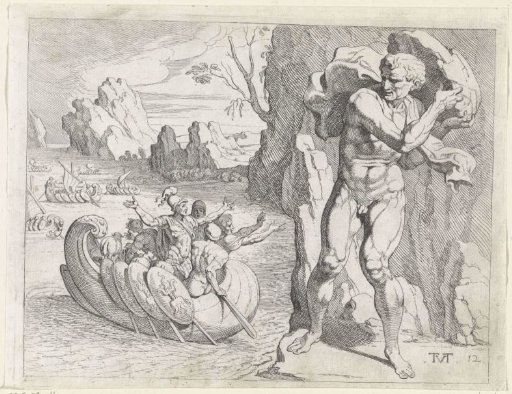
Once at sea, Odysseus cannot resist calling out his real name. Now Polyphemus can name him in a prayer to his father, Poseidon: let Odysseus reach home late, alone and in misery. The curse shapes the rest of the voyage. A bag of winds, a gift from Aeolus, is opened by the crew within sight of Ithaca and blows the fleet all the way back. Then the giant Laestrygonians destroy eleven of the twelve ships. One ship sails on and reaches the island of Circe.
Circe
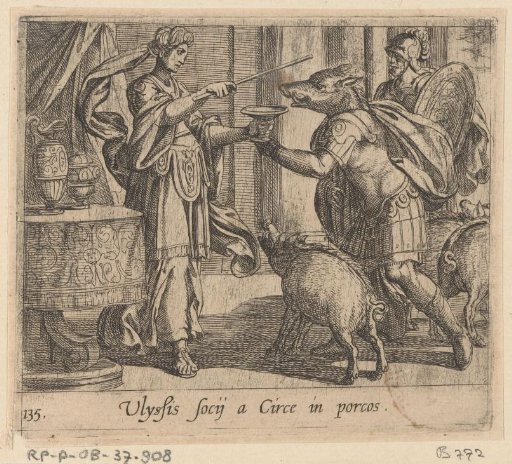
Circe turns half the crew into pigs, leaving their human minds intact. Hermes gives Odysseus a herb that protects him from her magic, and he forces her to restore the men. They remain on her island for a year. When they finally prepare to leave, Circe sends them first to the land of the dead.
The Underworld
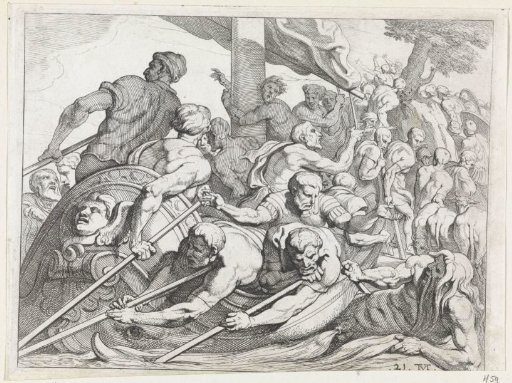
At the edge of the world, Odysseus makes offerings and the dead gather around him. Among them is his mother, Anticleia, who died while waiting for him to return. He has come to find the prophet Tiresias and ask for a route home.
Tiresias's warning
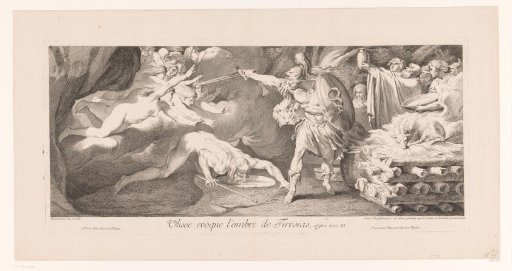
Tiresias gives Odysseus a route and a warning: spare the cattle of the sun god Helios, or lose the ship and every man aboard. Back among the living, Circe explains the dangers ahead, including the Sirens, Scylla and Charybdis.
The Sirens
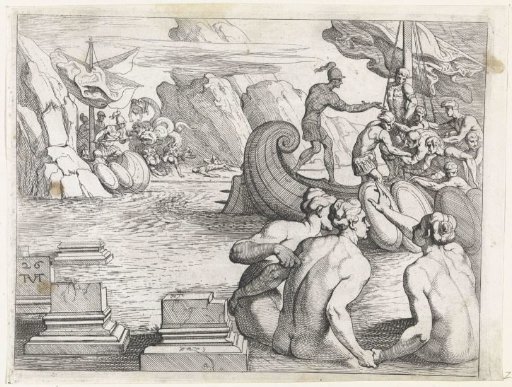
Odysseus seals his crew's ears with wax and has himself bound to the mast, so he can hear the song no sailor survives. When the Sirens begin to sing he begs to be released, and the crew ties him tighter and rows on. Beyond them, the six-headed Scylla takes six men from the deck. Later, the starving crew kill Helios's cattle while Odysseus sleeps. Zeus destroys the ship, leaving Odysseus as the only survivor. He drifts to Calypso's island.
Calypso
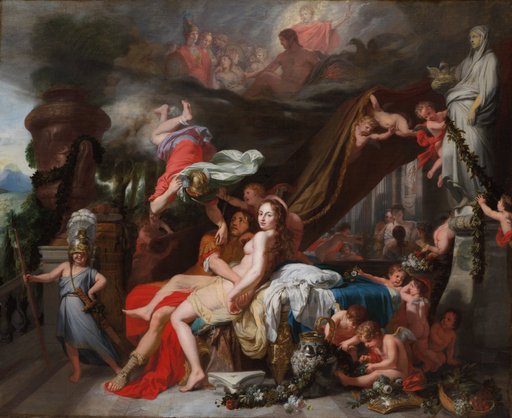
Calypso keeps Odysseus on Ogygia for seven years and offers him immortality if he stays. He still wants Ithaca. At Athena's urging, Zeus sends Hermes to order his release. Poseidon wrecks his raft one last time, but the seafaring Phaeacians shelter him, hear the whole story of the voyage, and finally carry him home while he sleeps.
The beggar and the dog
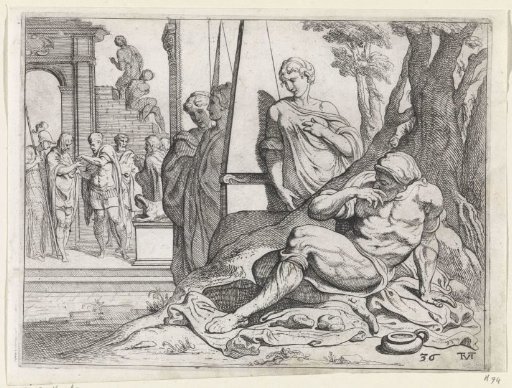
With his son Telemachus now part of his plan, Odysseus enters his own palace disguised as a beggar. His old dog Argos, lying neglected on a dung heap, recognises him at once, wags his tail and dies after seeing his master home. Inside, more than a hundred suitors are consuming Odysseus's household while pressing his wife Penelope to choose a new husband.
The contest of the bow
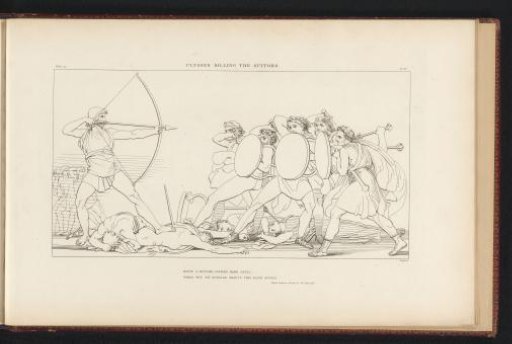
Penelope announces a contest: she will marry the man who can string Odysseus's bow and shoot an arrow through twelve axe heads. Every suitor fails. The beggar strings it with ease, makes the shot, then reveals himself. With Telemachus beside him, Odysseus kills the suitors.
Penelope
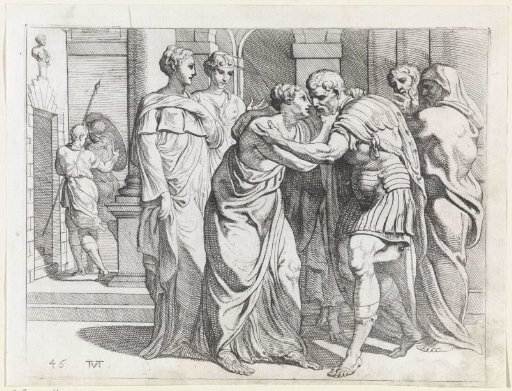
Penelope remains cautious. Twenty years is a long time, and she has been lied to before. She orders their marriage bed moved, and Odysseus protests that it cannot be: he built it himself around a living olive tree rooted in the ground. Only the two of them know that secret. She recognises him and they are reunited. When the suitors' families come seeking revenge, Athena stops the fighting, and peace returns to Ithaca.
The etchings that outlived the palace
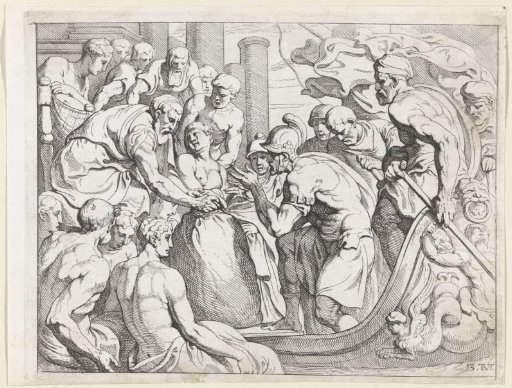
Nearly every etching on this page comes from one book. In 1633 the Flemish printmaker Theodoor van Thulden, then in his twenties, published Les Travaux d'Ulysse, a set of 58 prints telling the Odyssey from beginning to end. They were copies. The originals were frescoes in the Galerie d'Ulysse at the palace of Fontainebleau, where the Italian painters Francesco Primaticcio and Niccolò dell'Abate had spent years covering a gallery twice the length of the Hall of Mirrors at Versailles with the entire poem.
In 1738 Louis XV had the gallery demolished to make way for a new wing, and the frescoes went with the walls. Van Thulden's etchings became the fullest surviving record of what it looked like. The copies have now outlived the originals by nearly three centuries, and because they are public domain, they belong to everyone.
Free to download, all of it
Every work on this page is public domain: no permission, no fee, no licence to check. Click any caption to view the work, download it and see its source. Arkivism indexes millions of works like these from museum and archive collections, searchable by keyword or by describing what you are picturing.