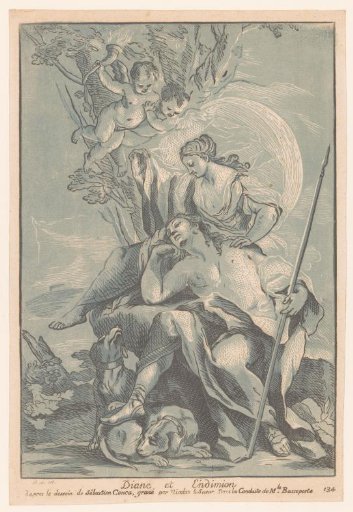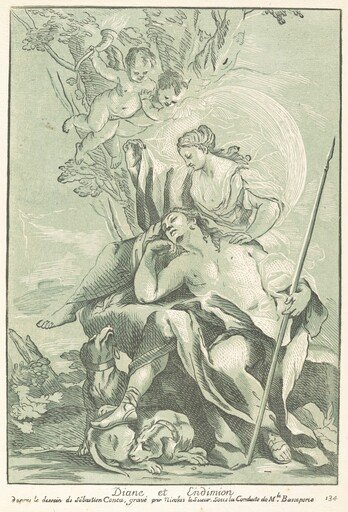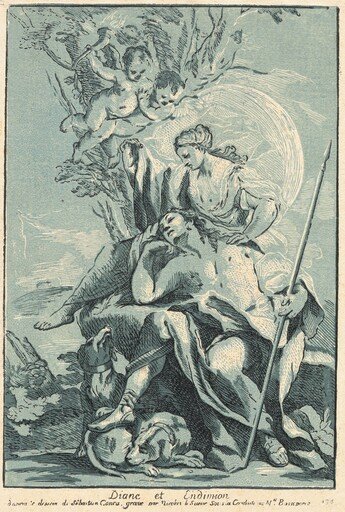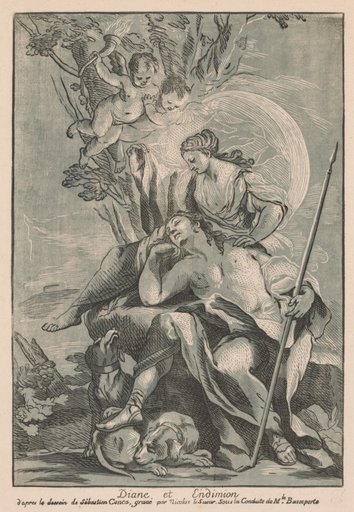
Diana and Endymion
From the collection of Cleveland Museum of Art. Free to download, adapt and use — no permission needed.
Chiaroscuro drawings were executed on paper colored a middle tone. While black or brown wash was used to create shadows, white gouache (opaque watercolor) was used for highlights. In the early 16th century, German printmakers developed a method to achieve similar effects using woodcut. The outline of the image is printed in black from one block of wood, while the shadows are printed from a second block in a color. For Diana and Endymion, two blocks were used to print two shades of green. The white, unprinted areas of the paper serve as the highlights. The technique of chiaroscuro woodcuts was revived in France in the early 18th century by LeSueur.
Cleveland Museum of Art’s own description