Peter Bruegel
From the collection of Cleveland Museum of Art. Free to download, adapt and use — no permission needed.
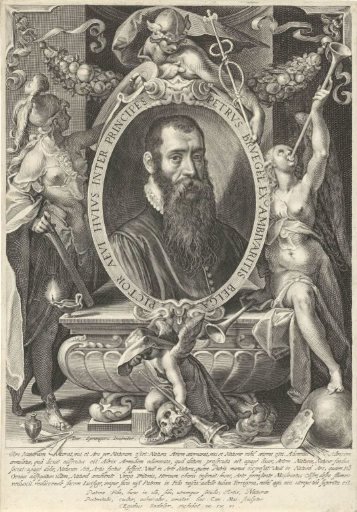
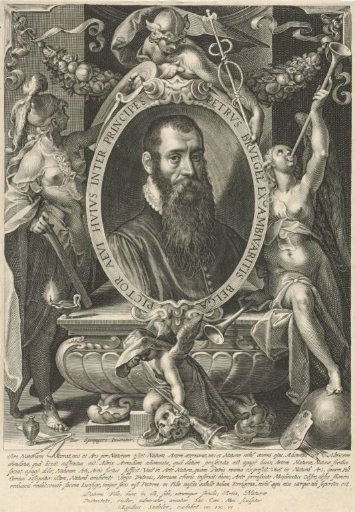
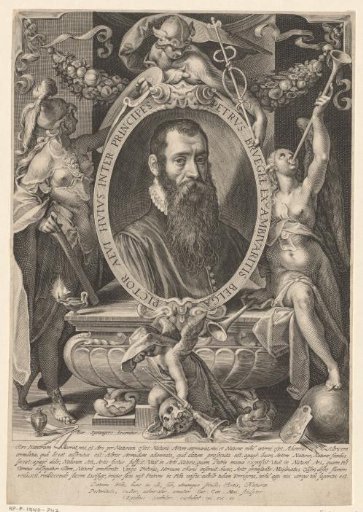
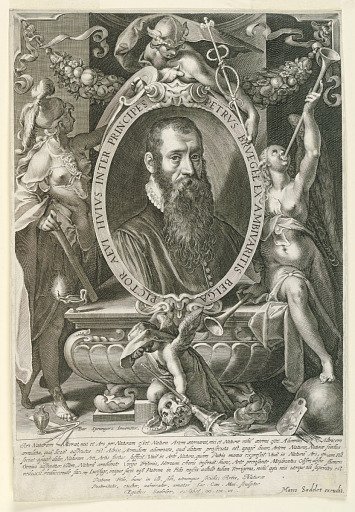
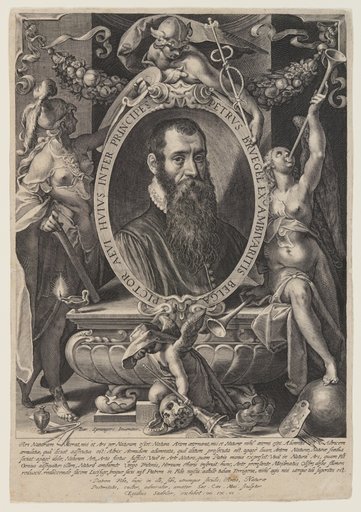
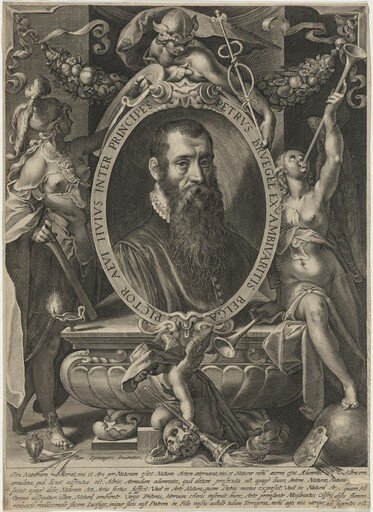
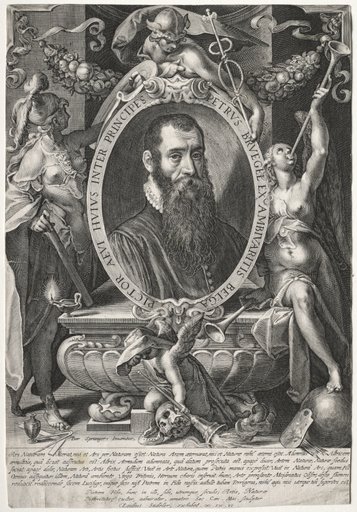
Around 1600, three decades after the death of artist Pieter Bruegel (about 1525-1569), a renewed interest in his work sparked the so-called Bruegel Renaissance. Admired for his scenes of everyday life and his realistic landscapes, he was highly praised for faithfully following nature. Appropriately, the inscription on Sadeler's print is a lengthy discussion about the imitation of nature, a matter of great interest to artists at the time. Bruegel is surrounded by Minerva and Mercury (who here personify Art and Eloquence, respectively) and a composite figure of Fortune and Fame. The cherub bearing the skull and torch at bottom is probably Thanatos, a classical symbol of death. He bows to mourn the artist, but as the still-flaming torch indicates, Bruegel's genius and fame are immortal.
Cleveland Museum of Art’s own description