CC0 · no rights reserved
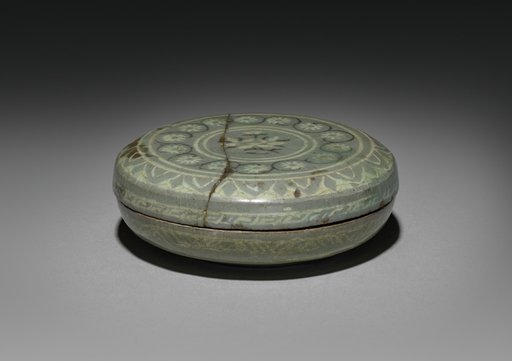
Box and Cover with Chrysanthemum and Scroll Design
From the collection of Cleveland Museum of Art. Free to download, adapt and use — no permission needed.
About this work
Celadons, spoons, seals, and bronze mirrors were the most common burial objects in tombs during the Goryeo period (918–1392). Once used to contain colored powder, rouge, and eyebrow gel for makeup, this small container was one of the standard goods that furnished elites' tombs. Both women and men used the grain powder of rice or millet for whitening their skin, safflower extract for rouge, and plant ash or soot for eyebrow gel. Yet, natural-looking makeup seems to have been the most favorable one in Korea according to the travelogue by Xu Jing (1091–1153), the Chinese diplomat who visited Korea in 1123.
Cleveland Museum of Art’s own descriptionCredit lineBox and Cover with Chrysanthemum and Scroll Design (청자 상감 국화·당초무늬 합 [靑磁象嵌菊花唐草文母子盒]), 1200s–1300s. Korea, Goryeo dynasty (918–1392). Inlaid celadon ware; overall: 2.8 cm (1 1/8 in.). The Cleveland Museum of Art, Gift of John L. Severance, 1928.169
Similar works
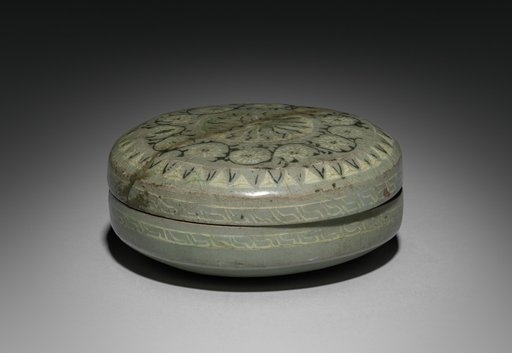 Box and Cover with Inlaid Chrysanthemum and Scroll Design
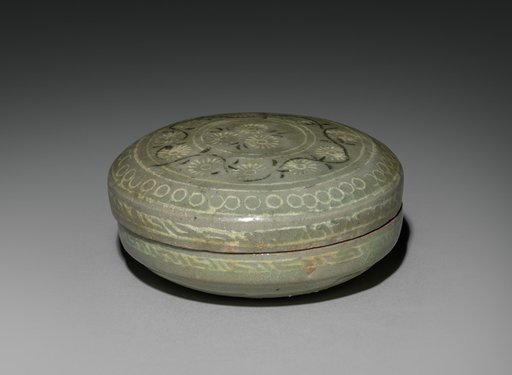 Box and Cover with Inlaid Chrysanthemum and Scroll Design
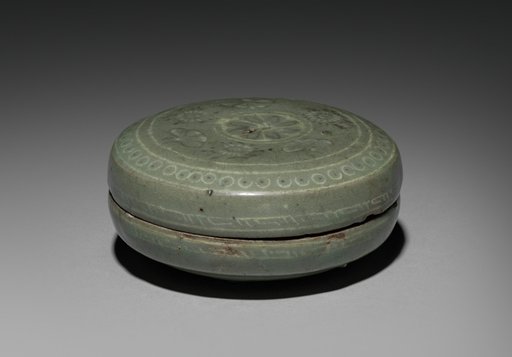 Box and Cover with Inlaid Chrysanthemum and Insect Design
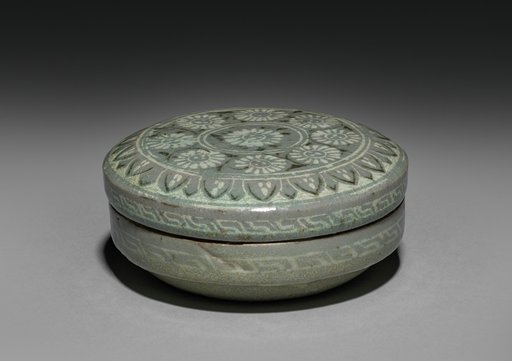 Box and Cover with Inlaid Phoenix Design
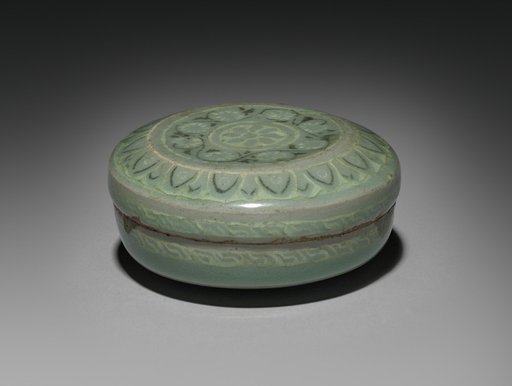 Box and Cover with Inlaid Chrysanthemum Design
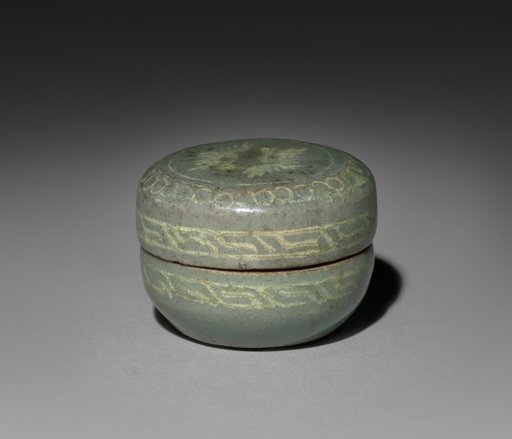 Box and Cover with Inlaid Crane Design