CC0 · no rights reserved
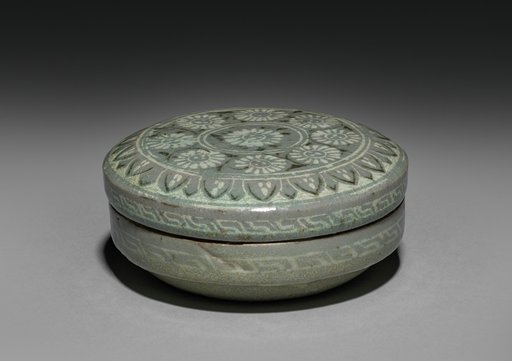
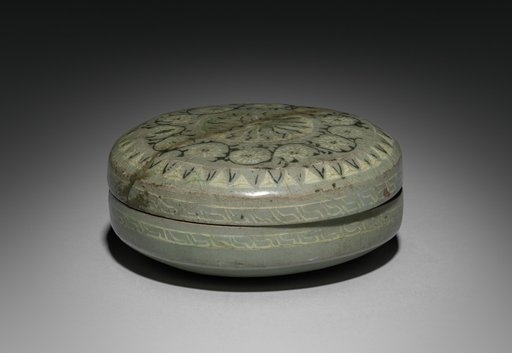
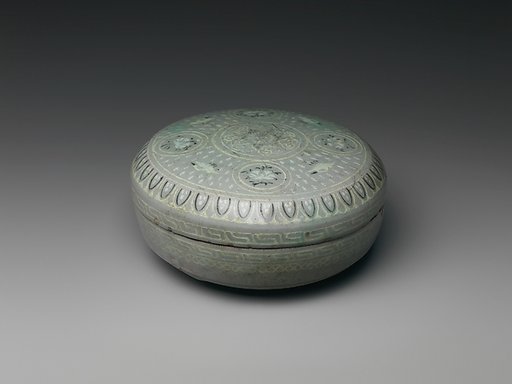
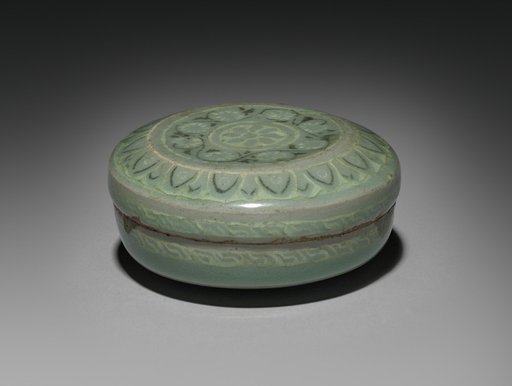
Box and Cover with Inlaid Chrysanthemum Design
From the collection of Cleveland Museum of Art. Free to download, adapt and use — no permission needed.
About this work
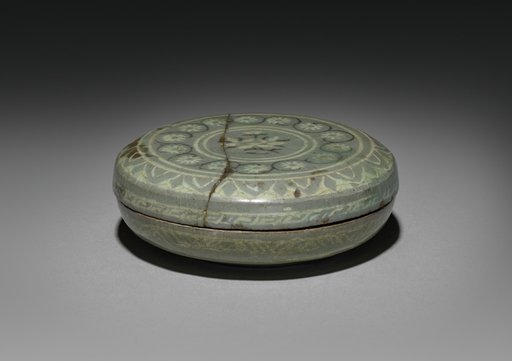
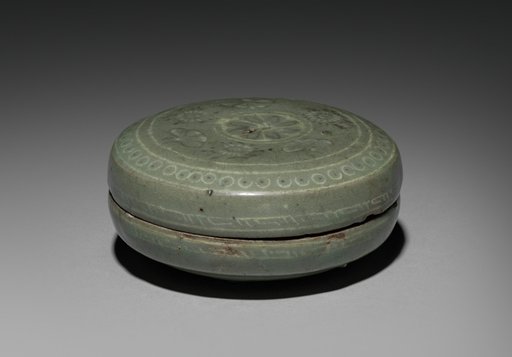
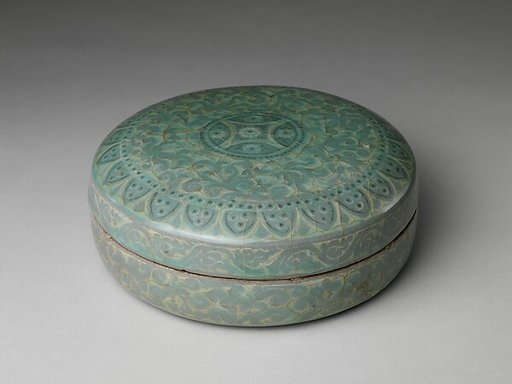
Celadons, spoons, seals, and bronze mirrors were the most common burial objects in tombs during the Goryeo period (918-1392). Once used to contain color powder, rouge and eyebrow gel for makeup, this small container was one of the standard goods that furnished elites' tombs. Goryeo-period women and men used the grain powder of rice or millet for whitening their skin, safflower extract for rouge, and plant ash or soot for eyebrow gel. Yet, natural-looking make-up seems to have been the most favorable one in Korea according to the travelogue by Xu Jing (1091-1153), the Chinese diplomat who visited Korea in 1123.
Cleveland Museum of Art’s own descriptionCredit lineBox and Cover with Inlaid Chrysanthemum Design (청자 상감 국화무늬 합 [靑磁象嵌菊文母子盒]), 1200s. Korea, Goryeo dynasty (918–1392). Celadon; diameter: 9.1 cm (3 9/16 in.); overall: 4.2 cm (1 5/8 in.). The Cleveland Museum of Art, Gift of John L. Severance, 1918.423