Text of the Perfection of Wisdom (Mahāprajñāpāramitā) Sūtra
From the collection of Cleveland Museum of Art. Free to download, adapt and use — no permission needed.
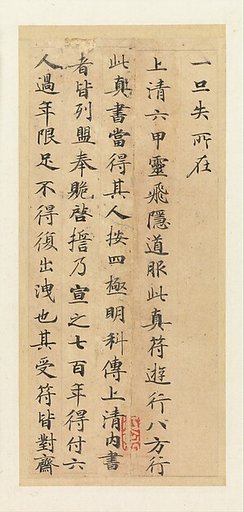
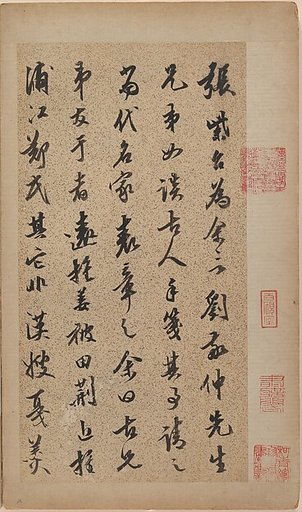
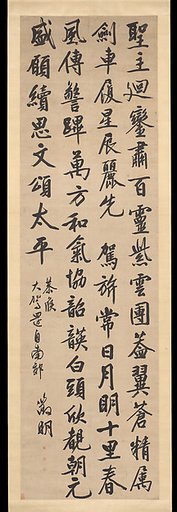
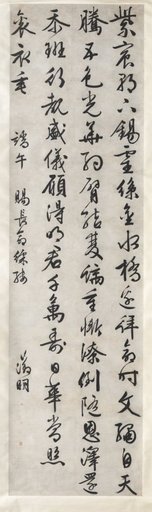
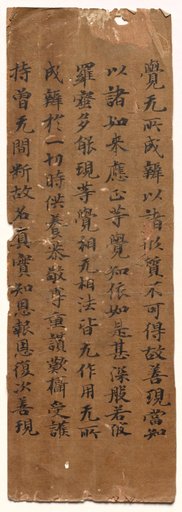
This precious text fragment is one of the earliest calligraphies in the collection. The text is copied from the Mahāprajñāpāramitā Sūtra (also called the Perfection of Wisdom Sutra (Chinese: 摩訶般若波羅蜜多經; Móhā Bōrĕ Bōluómìduō jing). The passage is part of a collection of sacred Buddhist texts written in India around 100 BC to AD 600 that were translated in the 700s by the Chinese monk Xuanzang. The paragraph is written in regular script style ( kaishu ) with deep black characters on brown aged paper that may have originally been dyed yellow. Mahāyāna Buddhism teaches that faithfully copying sutra texts is a good deed that helps one accumulate merit and the Buddha’s blessings—a way to gain rebirth in the Western Paradise.
Cleveland Museum of Art’s own description