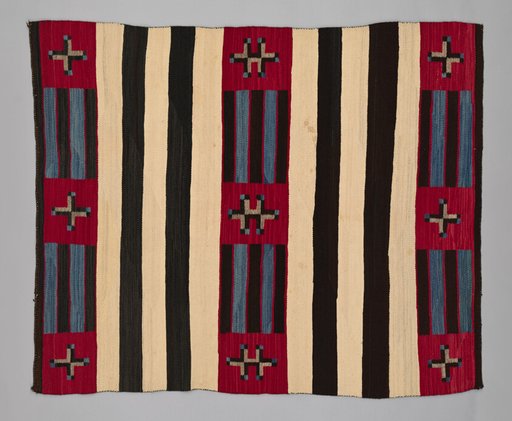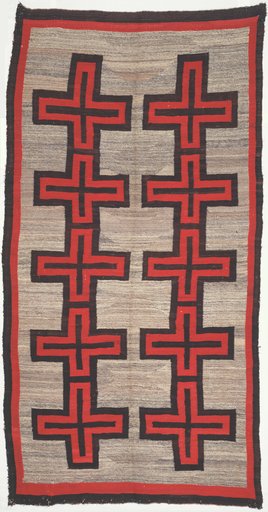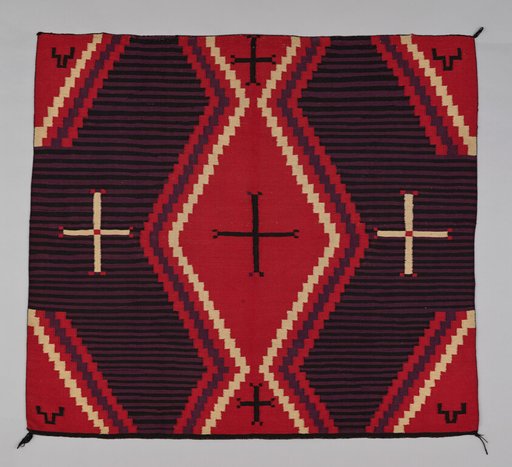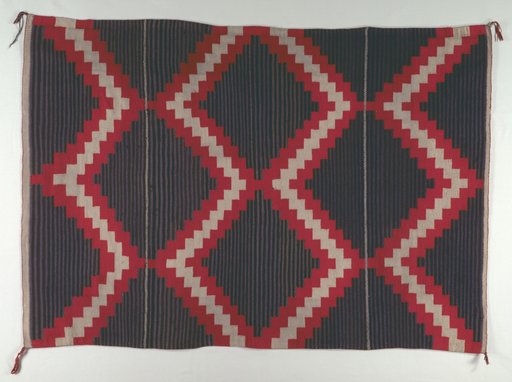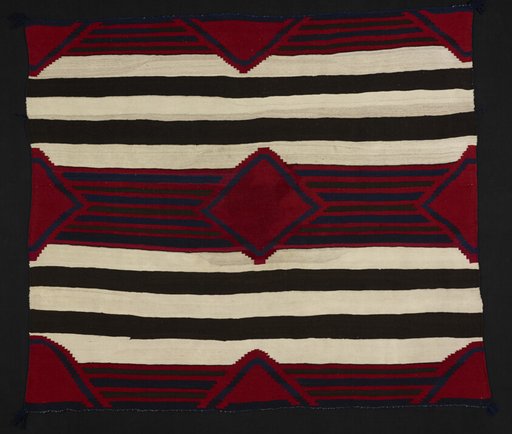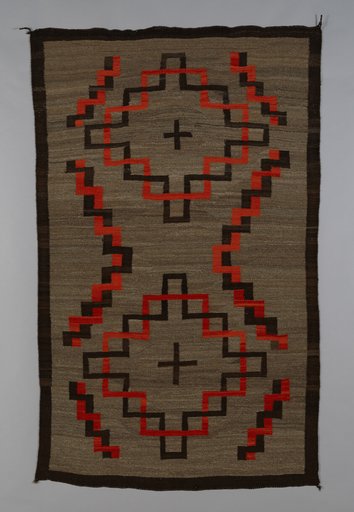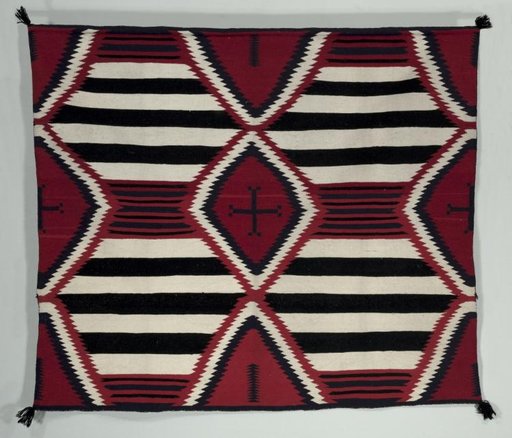
Fourth-Phase Chief Blanket Style Rug
From the collection of Cleveland Museum of Art. Free to download, adapt and use — no permission needed.
This rug is modeled on a coveted Diné (Navajo) garment type—a waterproof blanket worn around the shoulders. By the late 1700s, other Natives traded avidly for such blankets, which are classified according to design phases and known as “chief’s blankets,” a misnomer since the Diné have no chiefs. In the late 1800s, old Indigenous trade outlets collapsed, especially after the disastrous imprisonment of the Diné at Bosque Redondo in the 1860s. Responding to the dramatically transformed landscape in the aftermath, Diné weavers began to shift from making garments for Indigenous use, including trade, to creating items for the outside collectors’ market, such as rugs like this one.
Cleveland Museum of Art’s own description