Charity
From the collection of Cleveland Museum of Art. Free to download, adapt and use — no permission needed.
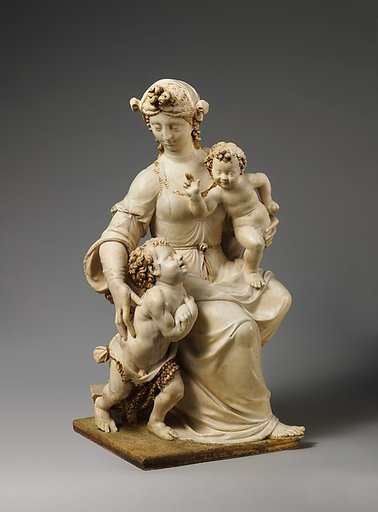
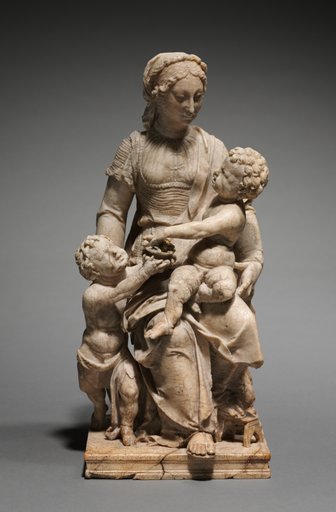
When this alabaster group entered the museum's collection, it was thought to depict the Virgin Mary, Christ, and Saint John the Baptist. It has been identified, however, as a personification of Charity, the most elevated of the three Christian theological virtues. The two other theological virtues are Faith and Hope. Within Christian belief, Charity is also known as a supernatural virtue, where the object of human conduct is the ultimate unification with God through love. Alluding to its eminent position, Charity sits enthroned, with powerful hybrid beasts supporting her chair. The diminutive footstool propping up her left foot may refer to the necessity of humility in one's relationship to God. Also, a child raises a vessel filled with fruits to another suggesting that selflessness and love are attributes of charitable actions.
Cleveland Museum of Art’s own description