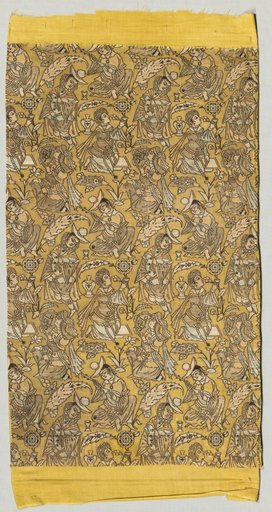
Lampas with dancers and musicians
From the collection of Cleveland Museum of Art. Free to download, adapt and use — no permission needed.
This sturdy silk with extensive silver-metal thread displays a dancer and musicians in varied Iranian and European attire, including curved-brim Portuguese or Dutch hats, that reflect the cosmopolitanism initiated by Shah ‘Abbas (reigned 1587–1629). The figures in this landscape are about the same size and equally spaced with minimal interaction, yet they create movement that disguises the repeat of the design. Although the history of textiles is replete with anonymity, signed silks were woven in Iran around 1600. The name of the presumed designer, Abdallah, appears in cursive script on the tambourines. The rise of signed textiles followed a shift away from royal manuscript patronage, causing artists to sign their work to sell in the marketplace. European influence, a new distinguishing hallmark, was transmitted through engravings by traveling European artists.
Cleveland Museum of Art’s own description