CC0 · no rights reserved
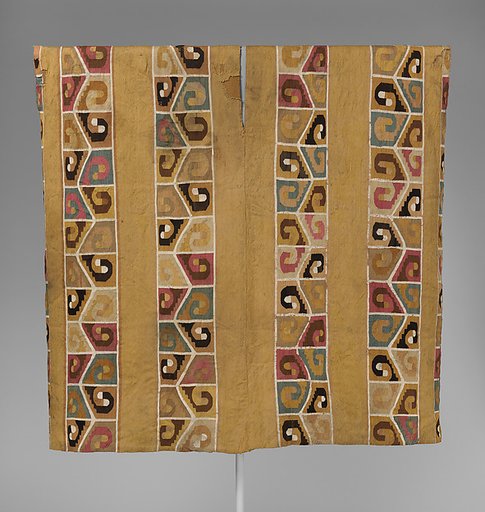
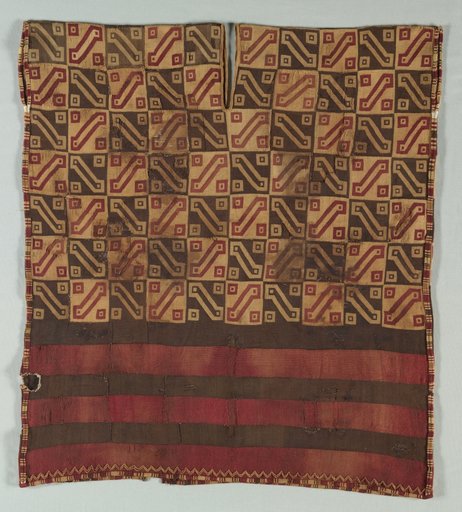
Tunic
From the collection of Cleveland Museum of Art. Free to download, adapt and use — no permission needed.
About this work
Finely woven interlocked tapestry garments were a privilege of the nobility within the Inca Empire. Such garments were made throughout the vast Inca territory by women of noble families, by professional weavers, and by the Aclla (Chosen Women). These specialists lived in cloistered communities and served the state by brewing beer and weaving fine cloth. The products of their labor were redistributed by the Inca state as prized gifts to loyal vassals and allies. The standardized decorative scheme of this tunic, known as the Inca Key, is one of the most common Inca tunic patterns.
Cleveland Museum of Art’s own descriptionCredit lineTunic, c. 1400–1540. Peru, Inca, 15th-16th century. Tapestry; cotton and camelid fiber; average: 85.1 x 76.2 cm (33 1/2 x 30 in.). The Cleveland Museum of Art, Gift of William R. Carlisle, 1957.136