Carpet
From the collection of Cleveland Museum of Art. Free to download, adapt and use — no permission needed.
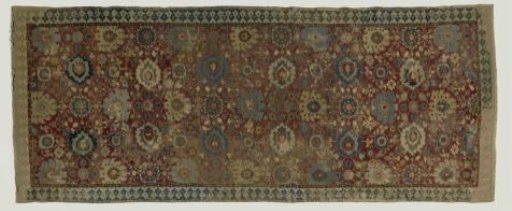
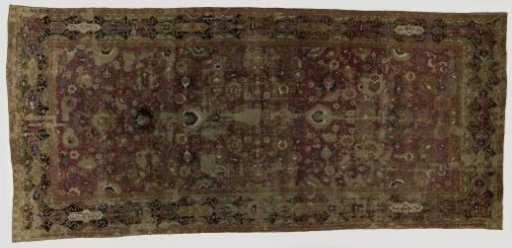
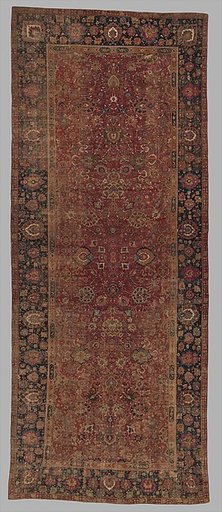
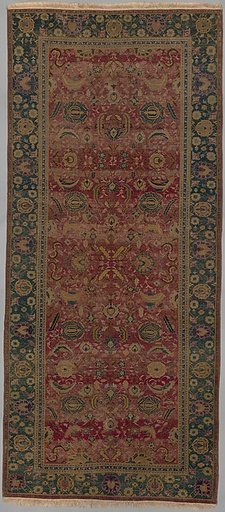
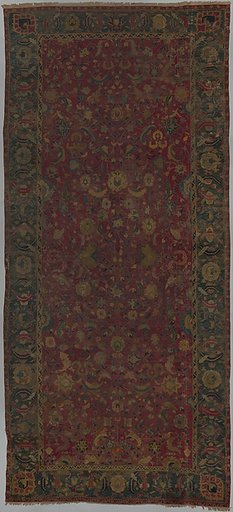
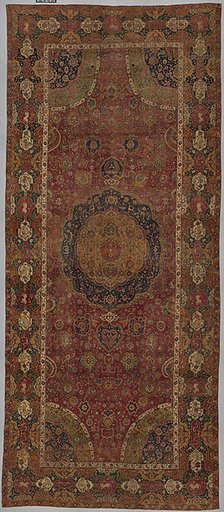
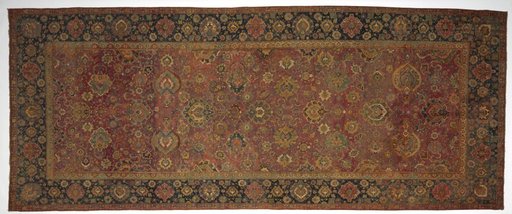
The Mughals, with their nomadic Central Asian roots, were constantly on the move. They were adept at transporting the trappings of their residences and bases of operation from place to place. Fine carpets and canopies demarcated places of importance, and could be rolled up and moved when the ruler was ready to consolidate his power at a new location. When they settled in stone palaces in India, the interiors were covered with carpets, lending a warmth to the spaces that cannot be felt at the sites today. This carpet is of the type that the Mughals would have acquired for their residences. Mughal paintings are filled with depictions of carpets and textiles, many ornamented, like this one, with delicate and complex palmette-dominated arabesque patterns that evoke a paradisiacal setting.
Cleveland Museum of Art’s own description