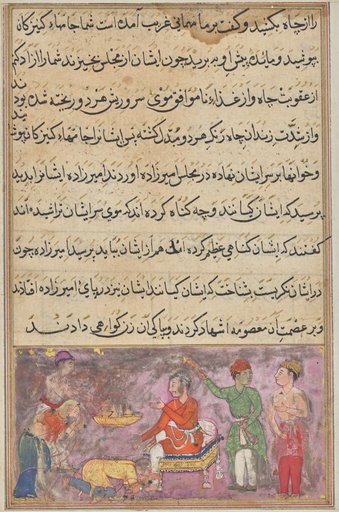
The two erring cooks, dressed as maidservants, fall at the prince’s feet and beg forgiveness, from a Tuti-nama (Tales of the Parrot): Fourth Night
From the collection of Cleveland Museum of Art. Free to download, adapt and use — no permission needed.
Seated on a fine stool in the center, the king is astonished to receive his two handsome cooks, whom he had sent to seduce his soldier’s faithful wife. After she trapped them and kept them prisoner for weeks until the arrival of the king, she shaved their heads and forced them to dress as female servants to shame them for testing her fidelity. Some folios in this manuscript were altered from their original compositions, creating discoloration in many areas. The yellow background was changed to lavender, the legs of the stool were shortened, and the king’s bolster lowered. The manuscript’s patron, the Mughal emperor Akbar, brought artists from many regions of India to work in his court, and some of their compositions and color choices were updated, apparently after they learned of Akbar’s stylistic preferences. This important manuscript, which is almost entirely in the Cleveland Museum of Art’s collection, is critical for understanding the early development of Mughal painting.
Cleveland Museum of Art’s own descriptionSimilar works
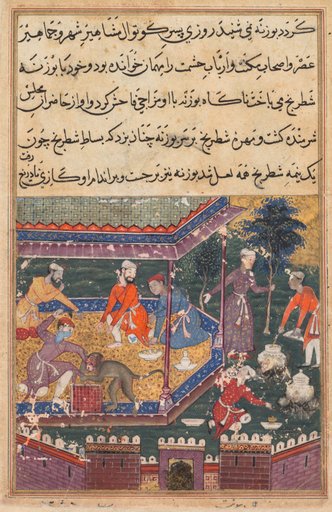 The wounded monkey bites the hand of the prince, his chessmate, in the presence of guests, from a Tuti-nama (Tales of a Parrot): Fifth Night
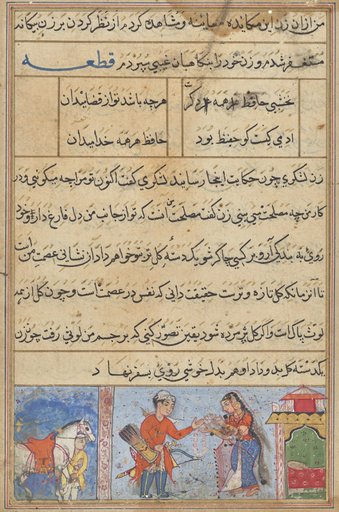 The soldier receives a garland of roses from his wife which will remain fresh as long as she is faithful, from a Tuti-nama (Tales of a Parrot): Fourth Night
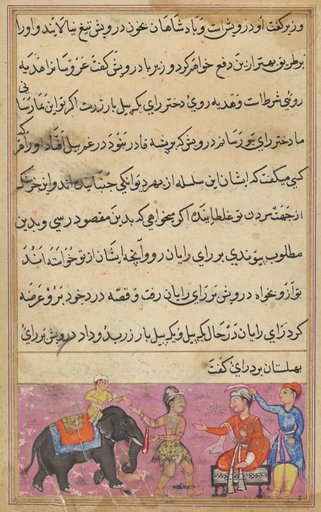 The dervish brings in as dowry an elephant laden with gold, from a Tuti-nama (Tales of a Parrot): Seventh Night
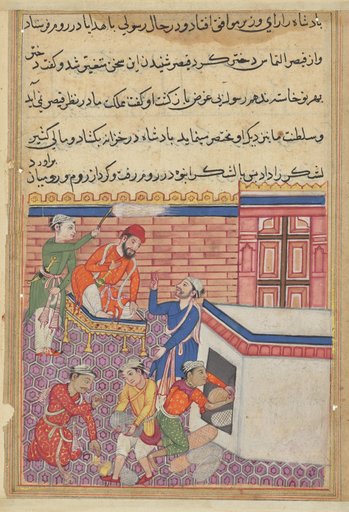 The king’s emissary being provided with gifts for his mission to Rum in order to seek the hand of the emperor’s daughter in marriage, from a Tuti-nama (Tales of a Parrot): Fiftieth Night
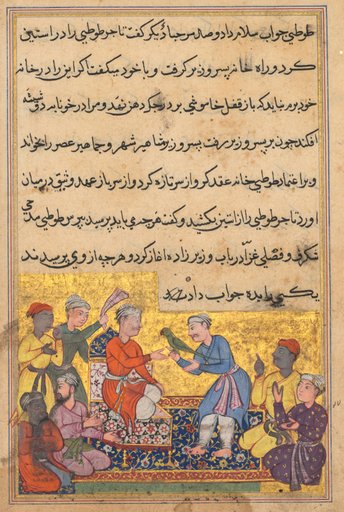 The magic parrot of the merchant talks to the vizier’s son, from a Tuti-nama (Tales of a Parrot): Tenth Night
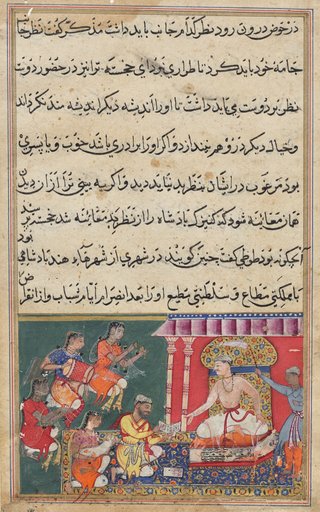 The astrologer predicts a calamity for the newly born prince in his thirteenth year, but one which he would be able to overcome, from a Tuti-nama (Tales of a Parrot): Eighth Night