CC0 · no rights reserved
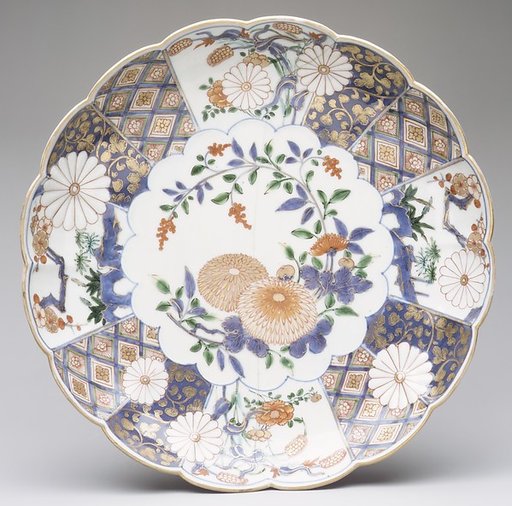
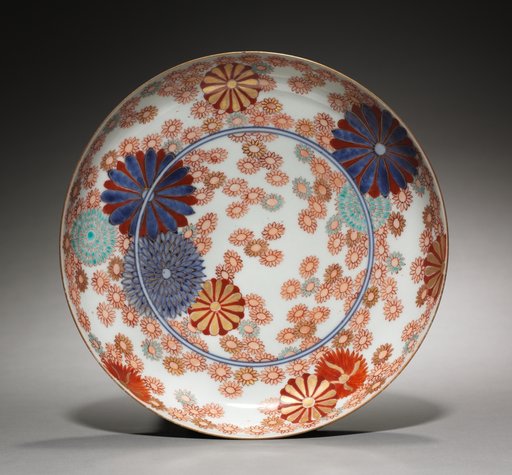
Dish with Chrysanthemums and Marigolds
From the collection of Cleveland Museum of Art. Free to download, adapt and use — no permission needed.
About this work
In the Edo period, the chrysanthemum was one of the most popular motifs for porcelains exported to Europe. This dish shows that the chrysanthemum pattern applied well to colored porcelains after the Japanese learned the technique of firing wares at a high temperature. Four kinds of large chrysanthemum patterns are represented here. Tiny marigolds or wild chrysanthemums are spread across the entire dish. Gold, called kinrantei , was painted onto the 16-layered chrysanthemums, and red and blue onto the others. Red outlines strengthen the decorative beauty while gold outlines adorn the large chrysanthemum.
Cleveland Museum of Art’s own descriptionCredit lineDish with Chrysanthemums and Marigolds, 1700s. Japan, Edo period (1615–1868). Imari ware porcelain with underglaze blue and overglaze enamel and gold decoration; diameter: 21.1 cm (8 5/16 in.); overall: 3.2 cm (1 1/4 in.). The Cleveland Museum of Art, Severance and Greta Millikin Collection, 1964.265