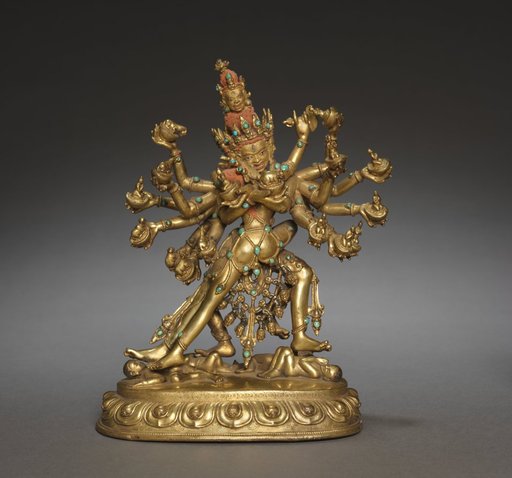
Hevajra and Consort
From the collection of Cleveland Museum of Art. Free to download, adapt and use — no permission needed.
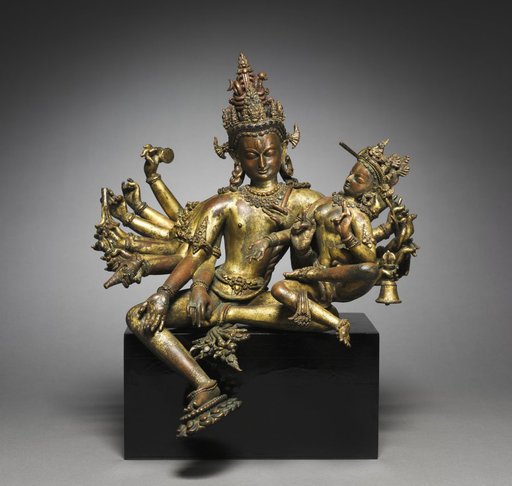
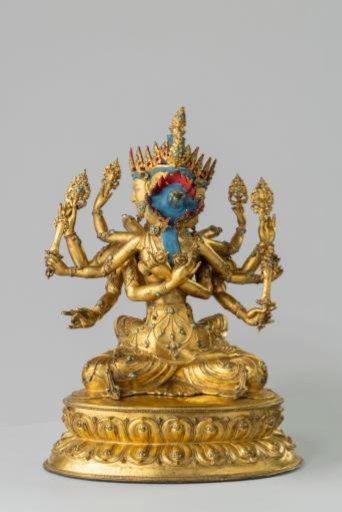
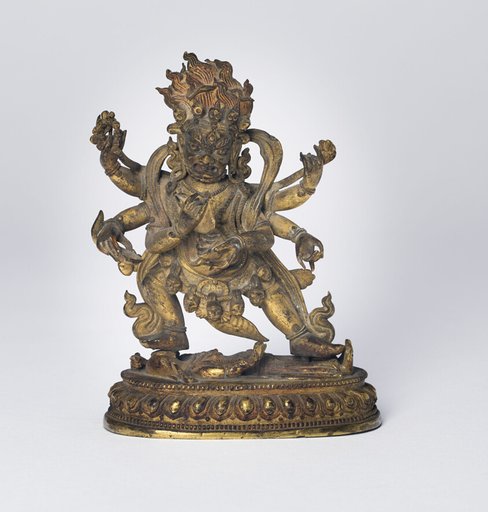
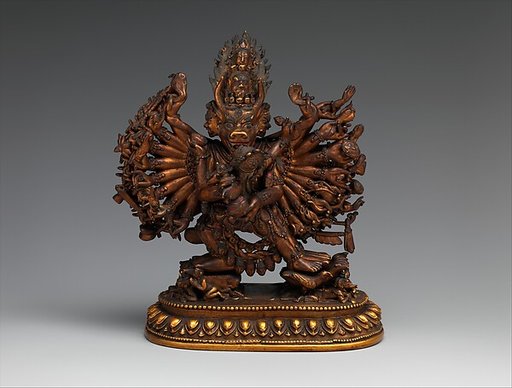
The use of this piece in a ritual context would have indicated that practitioners were following the methods for reaching enlightenment set forth in the Hevajra Tantra text. Nairatmya, the female consort of Hevajra, appeared to the yogi Virupa (at left) in a vision and revealed to him the contents of the text, which was then passed down through a lineage of disciples. An emanation of Akshobhya, the Cosmic Buddha of the East, Hevajra holds a skull bowl in his 16 hands. The rear pair of Hevajra's four legs is shown in a dynamic dance posture, while his front two legs are in a lunge, trampling the miserable personifications of ignorance and the false sense of ego. Also trampling them is the left foot of his consort Nairatmya, who has her other leg wrapped around his waist. The figures are explicitly shown in sexual union, indicative of the bliss that comes from conquering all impediments to enlightenment.
Cleveland Museum of Art’s own description