CC0 · no rights reserved
Rhyton
From the collection of Cleveland Museum of Art. Free to download, adapt and use — no permission needed.
About this work
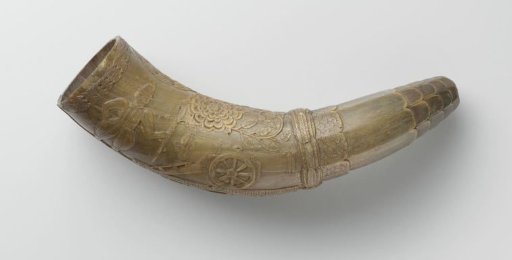
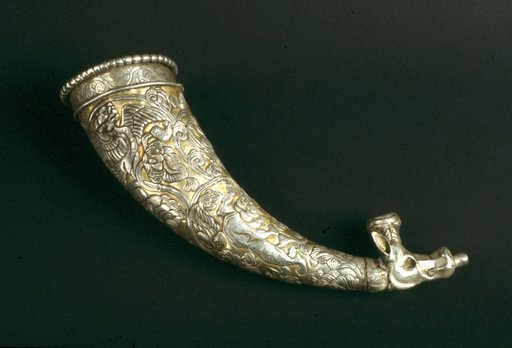
The form of the animal-headed rhyton as a drinking vessel and the use of silver are evidence of cultural exchange with Persia, while the lush, luxurious quality of the design and the form of the lions and curling dragon on one side of the decanter reveal an awareness of Chinese forms. Poured into the large opening at the top of the horn, wine then flowed out through the small tube held between the parted lips of a bovine-like animal. To keep from spilling, drinkers could stop the flow of the liquid by holding a thumb over the lower aperture.
Cleveland Museum of Art’s own descriptionCredit lineRhyton, c. late 600s–early 700s. Central Asia (Sogdiana) or Tibet. Silver with gilded foil; overall: 30.5 cm (12 in.); . The Cleveland Museum of Art, Gift of Mrs. Clara Taplin Rankin, 1988.67.3