CC0 · no rights reserved
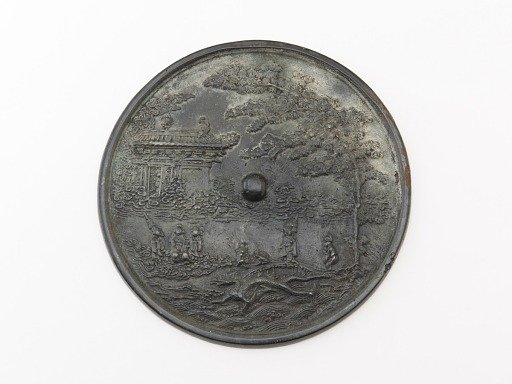
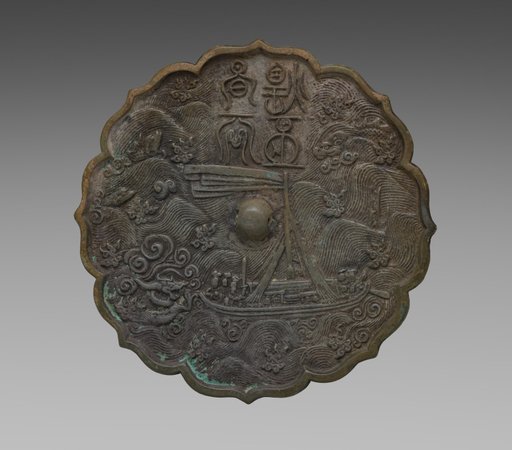
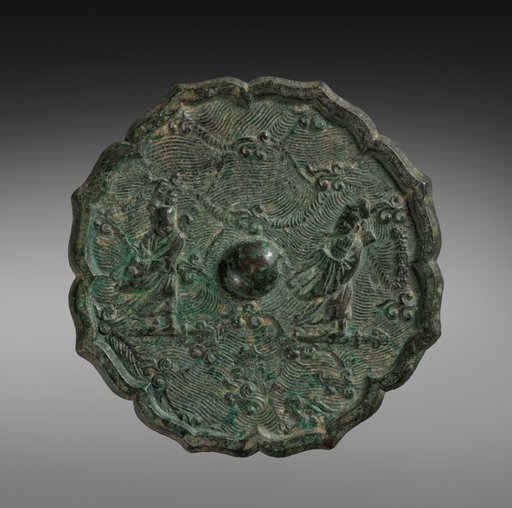
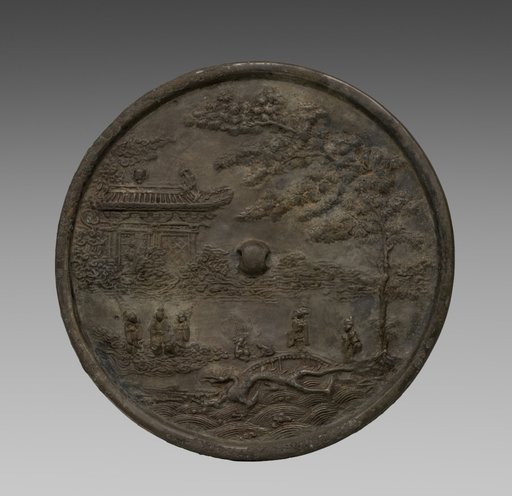
Octafoil Mirror with Lunar Palace
From the collection of Cleveland Museum of Art. Free to download, adapt and use — no permission needed.
About this work
Bronze mirrors typically have one polished and one decorated side and were used in tombs for ritual purpose or served as disks for reflection. This mirror depicts the imagined scene of the moon in Chinese mythology. Legend says that the goddess Chang E consumed the elixir of immortality that she stole from her husband, the archer Yi, and flew to the moon. Chang E’s palace, the Broad Cold Palace ( Guanghan gong ) on the left side of the composition, is juxtaposed with a tall pine tree symbolizing longevity.
Cleveland Museum of Art’s own descriptionCredit lineOctafoil Mirror with Lunar Palace (月宮鏡), early 1100s–mid-1200s. China, Jin dynasty (1115–1234). Bronze; diameter: 21.3 cm (8 3/8 in.); overall: 0.9 cm (3/8 in.); rim: 0.8 cm (5/16 in.). The Cleveland Museum of Art, Gift of Drs. Thomas and Martha Carter in Honor of Sherman E. Lee, 1995.375