CC0 · no rights reserved
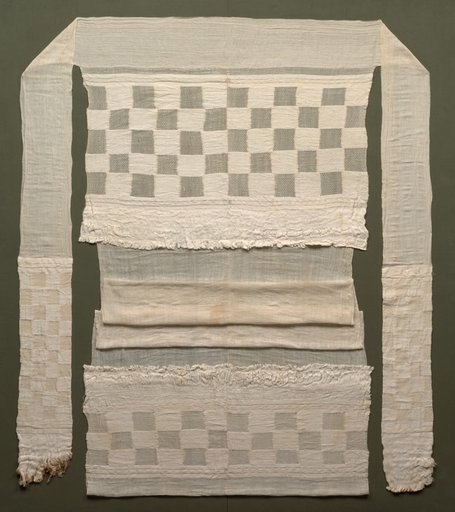
Loincloth
From the collection of Cleveland Museum of Art. Free to download, adapt and use — no permission needed.
About this work
Loincloths were basic men’s wear in ancient Peru. But the extraordinary size of some examples—this one is about eight feet long, unfolded—makes it difficult to know how they were worn, except that they were tied around the waist with the decorated panels hanging at the front and back of the body. The appearance may have been that of a billowing skirt.
Cleveland Museum of Art’s own descriptionCredit lineLoincloth, 1425–1500 (radiocarbon date, 92.3% probability). Peru, North Coast, Chimú style, 1200–1460s. Cotton; plain weave, brocaded and complex alternating gauze with 5 shots of plain weave between gauze shots; overall: 151.1 x 57.2 cm (59 1/2 x 22 1/2 in.); mounted: 167.6 x 71.1 cm (66 x 28 in.). The Cleveland Museum of Art, Norman O. Stone and Ella A. Stone Memorial Fund, 2005.5.2
Similar works
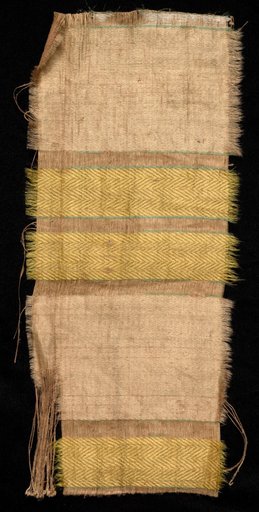 Brocade Fragment
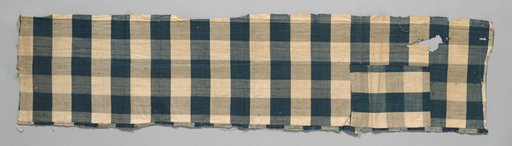 Fragment
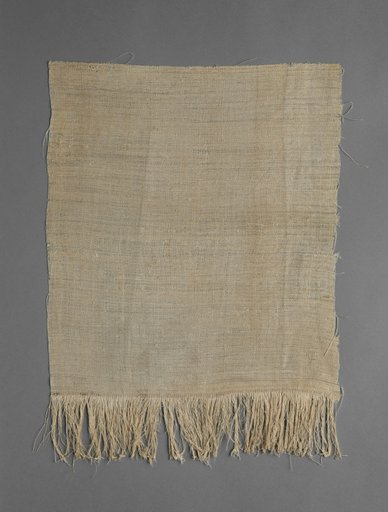 Mummy Linen
 Embroidered Sampler
 Piece of batiste with embroidery lines and the initials I.Z.R and five insertions of bobbin lace with two stylised mirrored flowers between vertical lines and ovals
 Pin cushion of linen and cotton with six loops, four buttons, two hooks and eyes, and eight buttonholes; marked: GG 1893