CC0 · no rights reserved
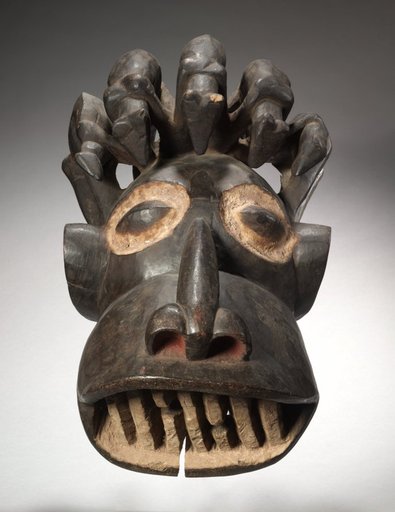
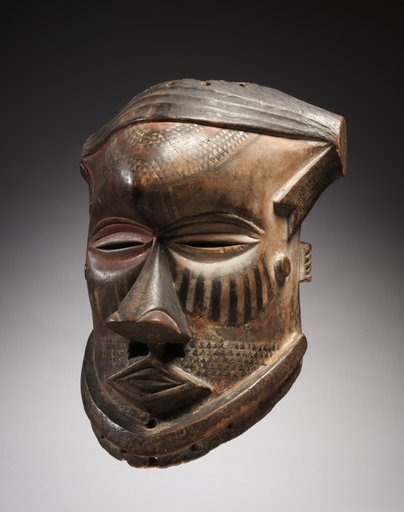
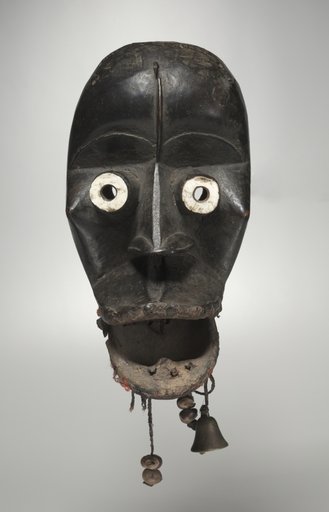
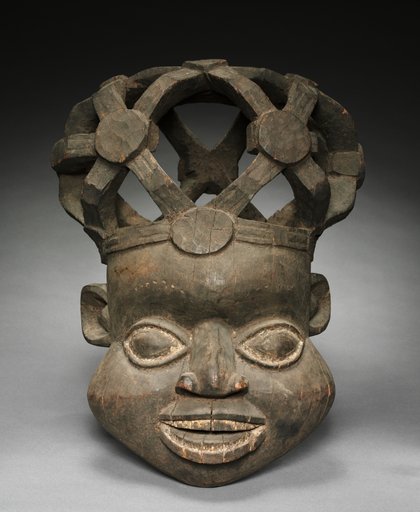
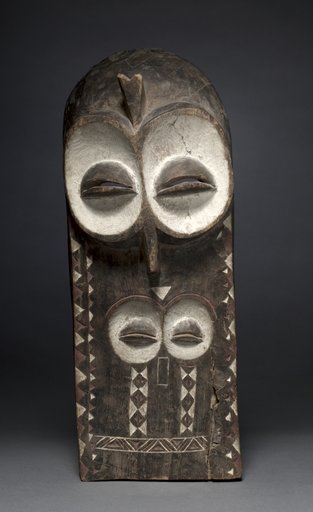
Mask (Emangungu)
From the collection of Cleveland Museum of Art. Free to download, adapt and use — no permission needed.
About this work
Rare anthropo-zoomorphic plank masks were once used by Bembe people in circumcision rites called butende . Recently initiated boys living in seclusion in the forest wore them with a bark-and-banana-leaf costume, disguising themselves to beg for food in the village. The sculpture’s short projections above the forehead are identified as an owl’s tufts. The two pairs of eyes could refer to divination. The rites associated with this mask had waned by the mid-1960s.
Cleveland Museum of Art’s own descriptionCredit lineMask (Emangungu), possibly early 1900s. Africa, Central Africa, Democratic Republic of Congo, Bembe-style maker. Wood, kaolin, colorant, and iron; overall: 46 cm (18 1/8 in.). The Cleveland Museum of Art, Leonard C. Hanna Jr. Fund, 2006.116