CC0 · no rights reserved
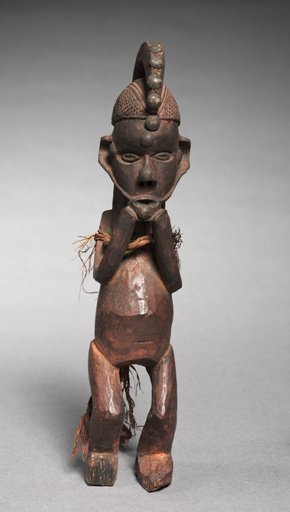
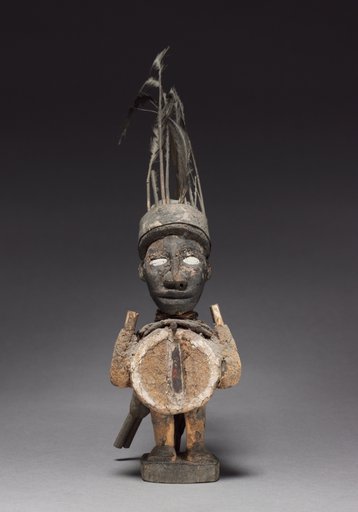
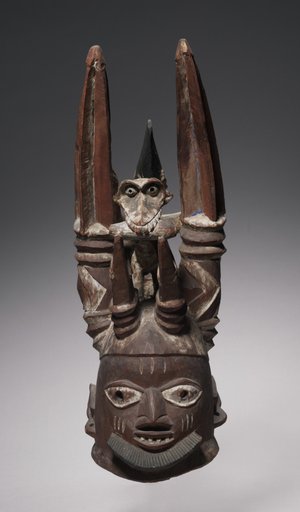
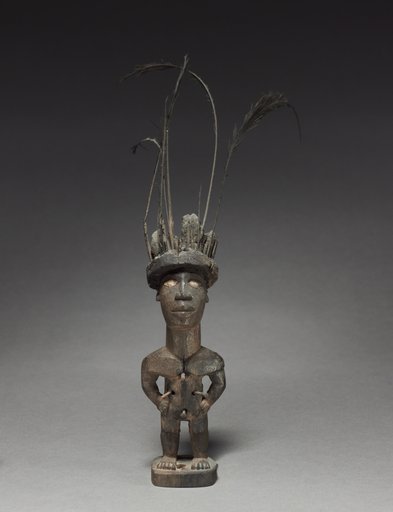
Male Figure (nkishi)
From the collection of Cleveland Museum of Art. Free to download, adapt and use — no permission needed.
About this work
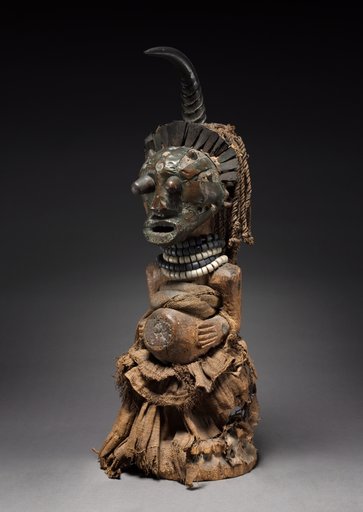
This figure's visual impact and workmanship suggest that an extended family––rather than an individual––used it. The raffia skirt around the waist and the blue and white beads are indicators of leadership. The metal appliqué covering the face and the metal blades that hedge the headgear refer to the blacksmith, a culture hero celebrated in a Songye myth narrating the formation of the state. The metal strips on the skeletal face are said to relate to lightning, signaling the figure's role as a powerful anti-sorcerer, but the contrast between white iron and red copper symbolically alludes to the ambivalent powers of the figure.
Cleveland Museum of Art’s own descriptionCredit lineMale Figure (nkishi), late 1800s–early 1900s. Africa, Central Africa, Democratic Republic of Congo, Songye-style carver and nganga (priest). Wood, glass beads, brass (including upholstery studs), copper alloy, iron alloy, raffia, reedbuck antelope horn, rawhide, animal hair, human teeth, organic material, minerals, and plant fibers; overall: 64 x 24.5 x 24 cm (25 3/16 x 9 5/8 x 9 7/16 in.). The Cleveland Museum of Art, René and Odette Delenne Collection, Leonard C. Hanna Jr. Fund, 2010.451