Virgin and Child
From the collection of Cleveland Museum of Art. Free to download, adapt and use — no permission needed.
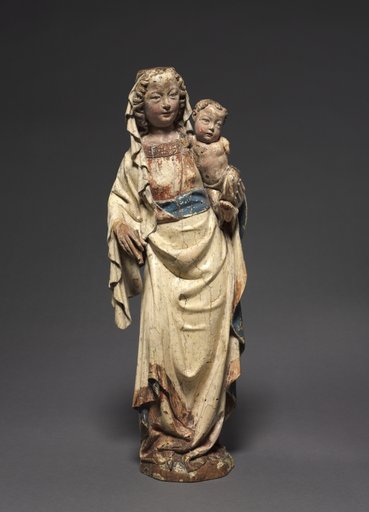
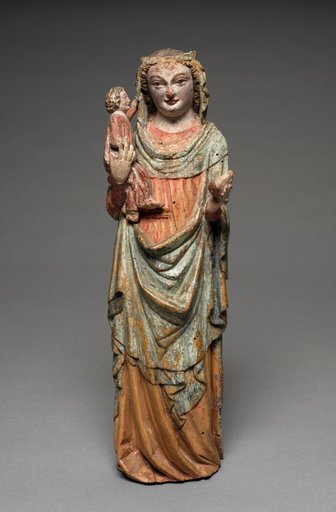
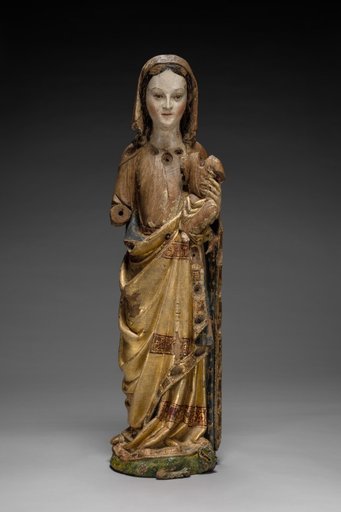
This sculpture is a rare survival in wood from the valley of the Meuse River (modern Belgium and Holland), an important region for the production of ecclesiastical art in the 1100s and 1200s. The elegantly draped figure is remarkable for the preservation of much of its original paint and gilding, including the Virgin's gilded mantle highlighted with decorative bands of geometric patterns and the green dragon on which she stands. There are small settings around the Virgin's neck and along the border of the mantle that would have originally been set with gem and glass cabochons in imitation of the richly adorned metalwork for which Mosan art was highly esteemed. The settings for these cabochons provide some hint of the original opulence of this sculpture. The Virgin's serene features and beautiful countenance are noteworthy, as is the refined execution of the draperies.
Cleveland Museum of Art’s own description