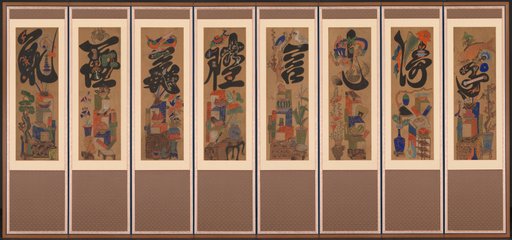
Munja-Chaekgeori Screen (Character-Books Screen)
From the collection of Cleveland Museum of Art. Free to download, adapt and use — no permission needed.
This folding screen is a whimsical harmony of two different subjects: chaekgeori , or books and things; and munja , or characters. The lower section of each panel depicts the imagery of things, including books, decorative arts, and utilitarian objects. The upper portion of each panel bears a classical Chinese character. Read from far right to left, the eight characters refer to the values of Confucian teachings of the Joseon dynasty: filial piety, brotherly love, loyalty, trust, propriety, righteousness, modesty, and humility. While these two pictorial genres are harmoniously conjoined on the same picture plane, two sharply contrasting world views—urban consumerism and traditional Confucian ethics that despise materialism—compete with one another.
Cleveland Museum of Art’s own description