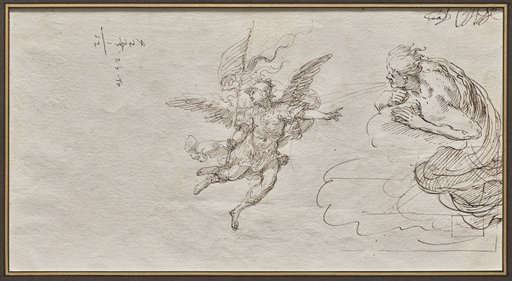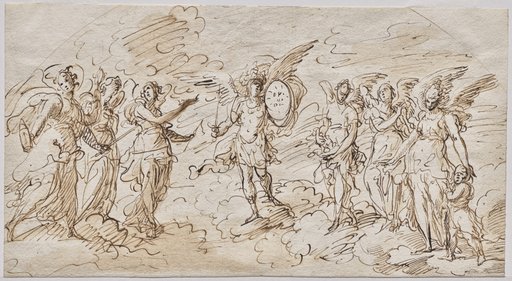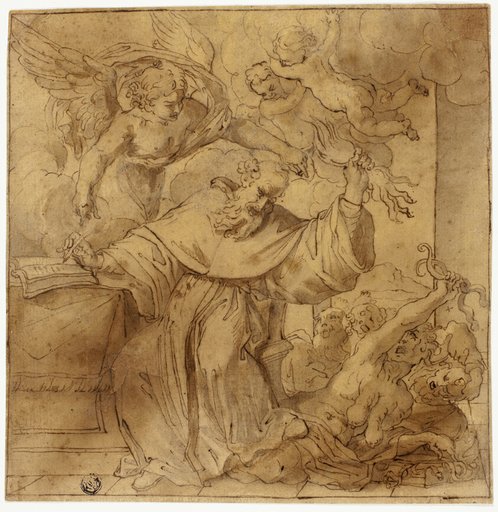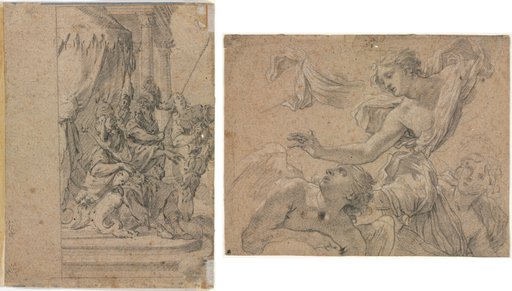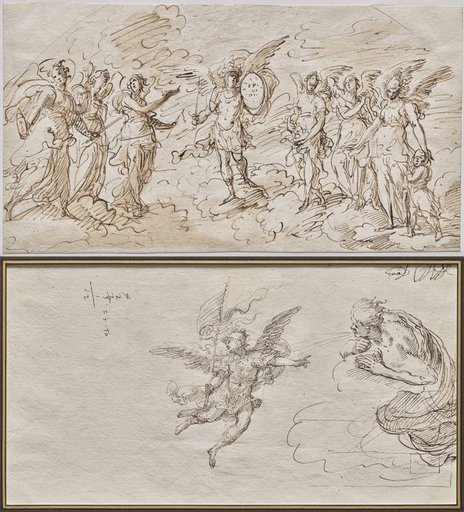
The Seven Archangels (recto); Studies of an Archangel and a Wind God (verso)
From the collection of Cleveland Museum of Art. Free to download, adapt and use — no permission needed.
Massimo Stanzione worked in the Spanish-held Kingdom of Naples, where, during the 1600s, painting was characterized by dramatic expression, emphatic naturalism, and intense chiaroscuro derived from the profound influence of Caravaggio (1571–1610). Stanzione, however, was known in the city as one of the main purveyors of a more classical style, a kind of antithesis to the passion and drama of such Neapolitan painters as Jusepe de Ribera. This drawing relates directly to a painting Stanzione made depicting the seven archangels at the Monasterio de la Descalzas Reales in Madrid. The iconography of the seven archangels was a regional focus of devotion in the Neapolitan kingdom, and in Spain, where the cult of the “Seven Angelic Princes” had been promoted by the 16th-century Sicilian friar Antonio Del Duca (1491–1564).
Cleveland Museum of Art’s own description