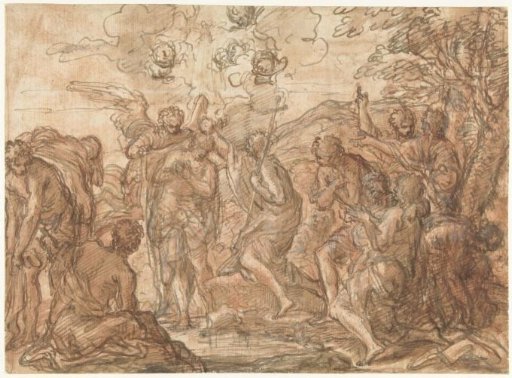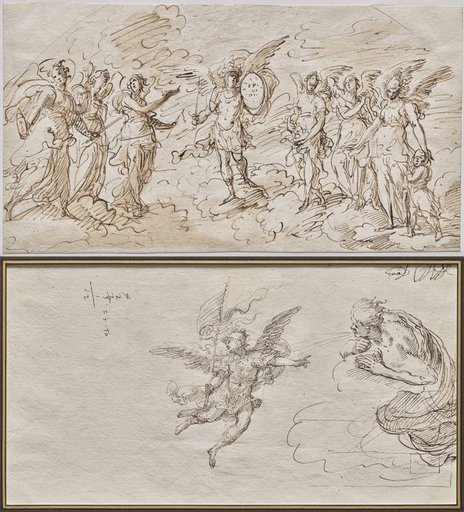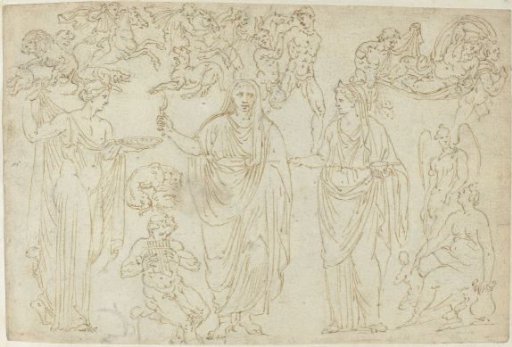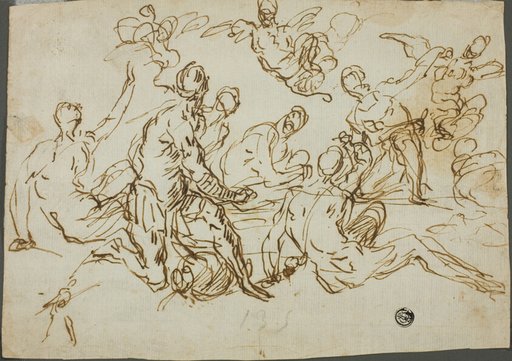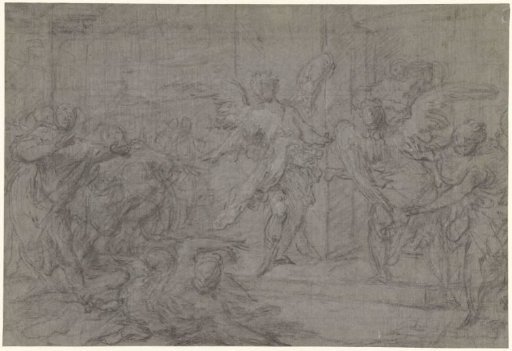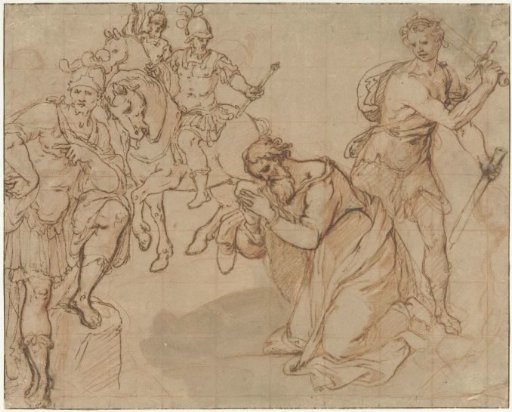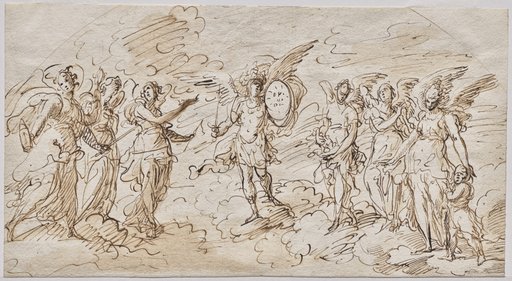
The Seven Archangels (recto)
From the collection of Cleveland Museum of Art. Free to download, adapt and use — no permission needed.
Massimo Stanzione worked in the Spanish-held Kingdom of Naples, where, during the 17th century, painting was characterized by dramatic expression, emphatic naturalism, and intense chiaroscuro derived from the profound influence of Caravaggio (1571-1610). Stanzione, however, was known in the city as one of the main purveyors of a more classical style, a kind of antithesis to the passion and drama of such Neapolitan painters as Jusepe de Ribera. This drawing relates directly to a painting Stanzione made depicting the seven archangels at the Monasterio de la Descalzas Reales in Madrid. The iconography of the seven archangels was a regional focus of devotion in the Neapolitan kingdom, and in Spain, where the cult of the “Seven Angelic Princes” had been promoted by the 16th-century Sicilian friar, Antonio Del Duca (1491-1564).
Cleveland Museum of Art’s own description