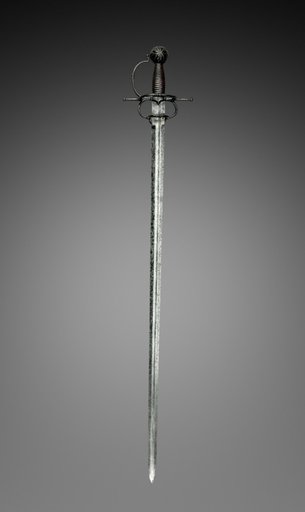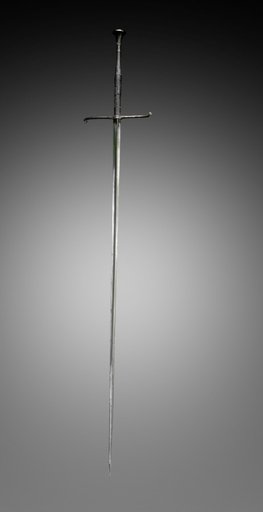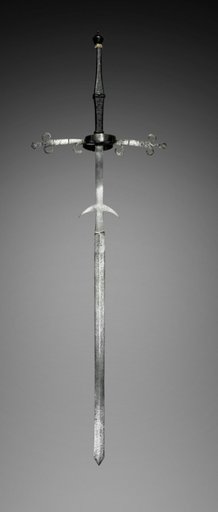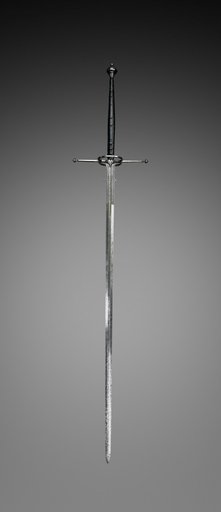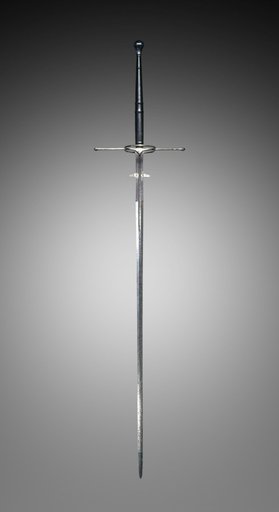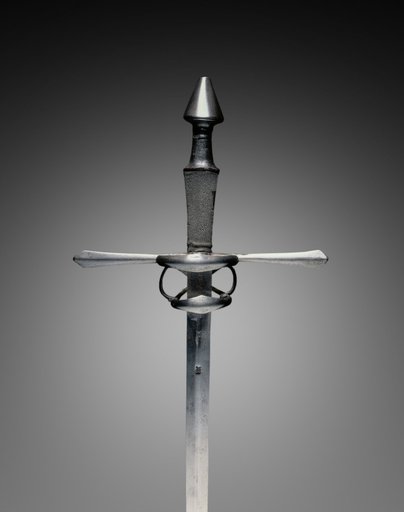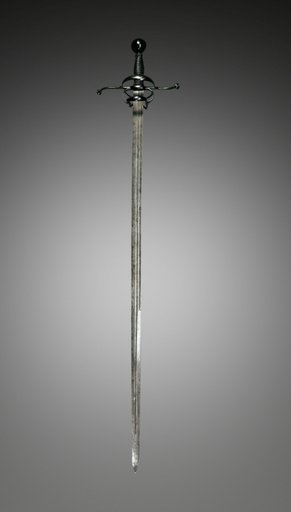
Rapier
From the collection of Cleveland Museum of Art. Free to download, adapt and use — no permission needed.
The rapier was a sword worn with civilian dress and used in duels. The term rapier derives from the 16th-century French word rapière , which in turn was derived from the Spanish espada ropera , or “dress sword.” The rapier was a light weapon with a straight double-edged and pointed blade that, with the development of the art of fencing in the 1500s and 1600s, gradually became narrower and lighter, and thus suitable for thrusts only. With the new technique of swordplay emphasizing the point of the blade, sword guards became more complex to protect the duelist’s unarmored hand. These elaborate guards were frequently decorated by various techniques—chiseling, bluing, russeting, and damascening.
Cleveland Museum of Art’s own description