CC0 · no rights reserved
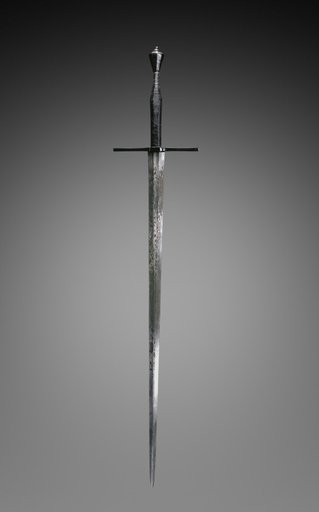
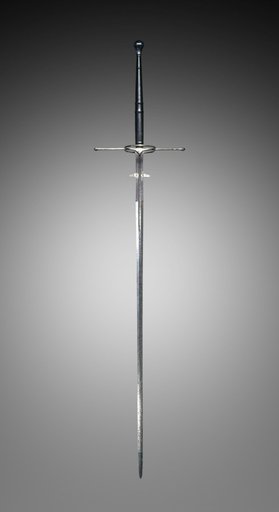
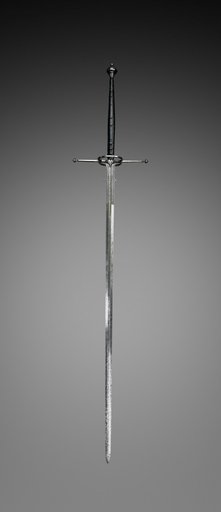
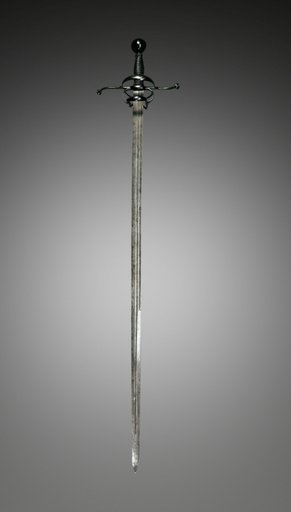
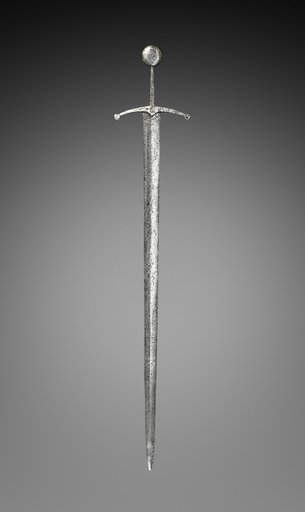
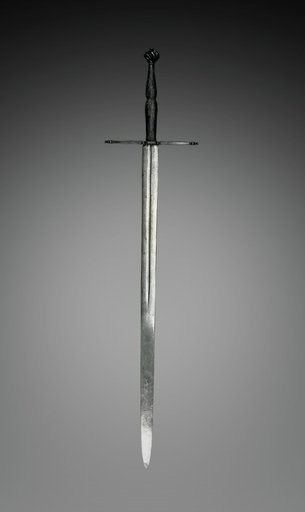
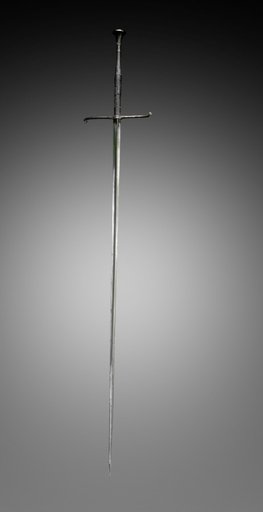
Estoc
From the collection of Cleveland Museum of Art. Free to download, adapt and use — no permission needed.
About this work
The French word estoc means "thrust" and therefore was adopted as the name for this long thrusting sword. It has a fairly long grip and simple cross-shaped hilt. The rigid blade, designed for thrusting at armored opponents, is three-sided for strength. The estoc was sometimes carried from the saddle. From the early 1300s, it was used by cavalrymen as an auxiliary side arm when a horseman had dismounted.
Cleveland Museum of Art’s own descriptionCredit lineEstoc, early 1500s. Germany, early 16th Century. Steel, wood and leather; overall: 156.6 cm (61 5/8 in.); blade: 125.3 cm (49 5/16 in.); quillions: 26.2 cm (10 5/16 in.); grip: 30 cm (11 13/16 in.). The Cleveland Museum of Art, Gift of Mr. and Mrs. John L. Severance, 1916.686