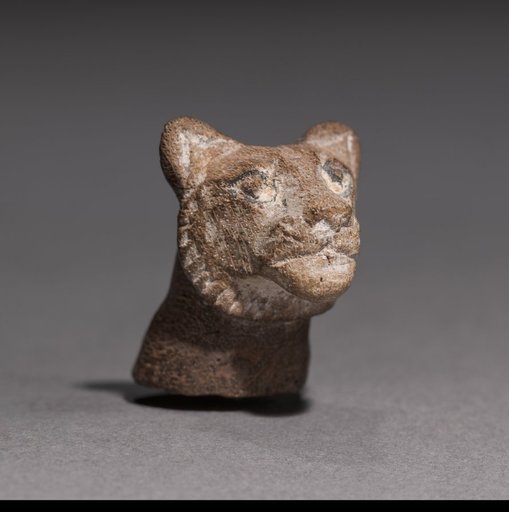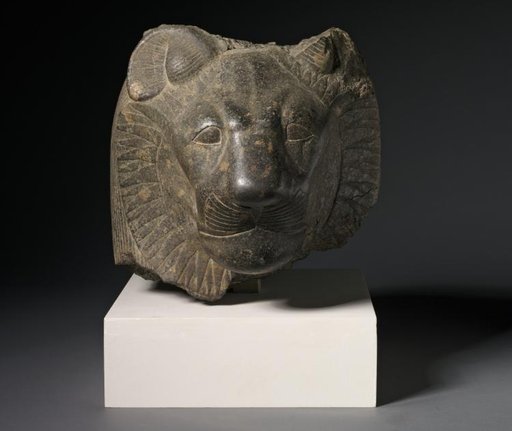
Head of Sekhmet
From the collection of Cleveland Museum of Art. Free to download, adapt and use — no permission needed.
This lioness head once belonged to a grand statue of the goddess Sekhmet, "the powerful one," probably seated and wearing a tight dress. Possibly appealing to her healing aspect, Pharaoh Amenhotep III, often described as “beloved of Sekhmet,” commissioned and dedicated hundreds of large granodiorite Sekhmet sculptures in his Theban mortuary temple. Thus, this head likely comes from Thebes, perhaps later moved across the Nile—like many such sculptures—to the temple of Mut, a related deity, at Karnak. Behind her stylized ruff, Sekhmet wears a wig, once crowned with a sun disk and uraeus, the stylized cobra symbolizing royal or divine power.
Cleveland Museum of Art’s own description