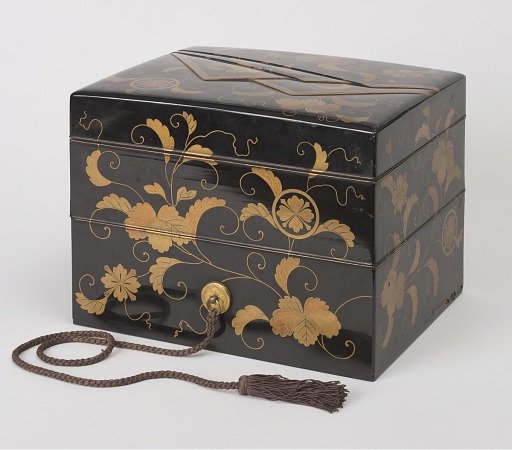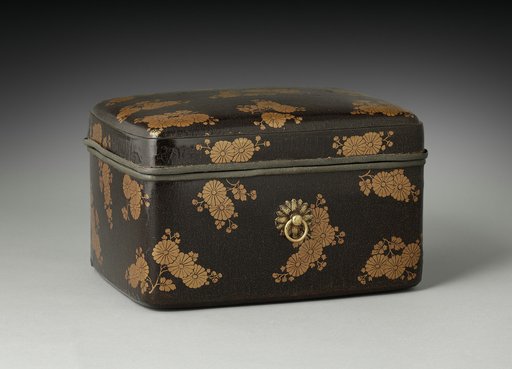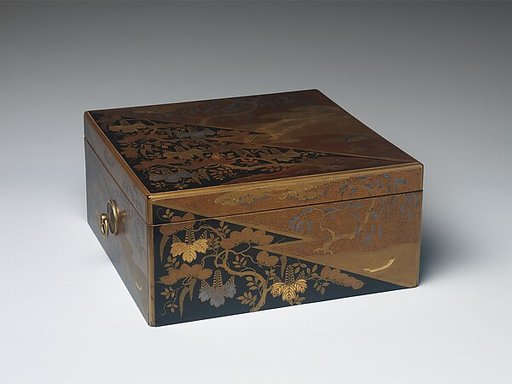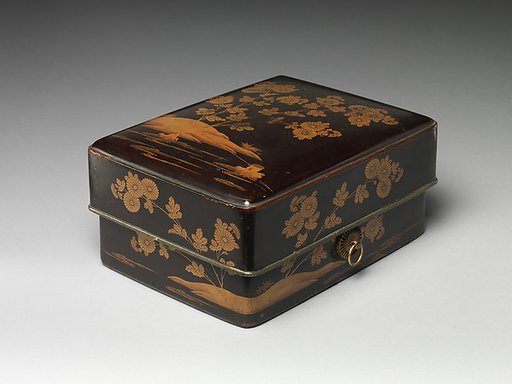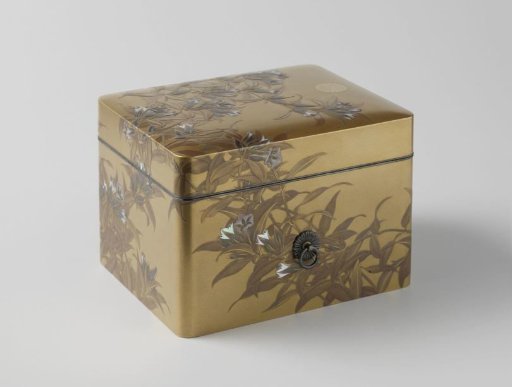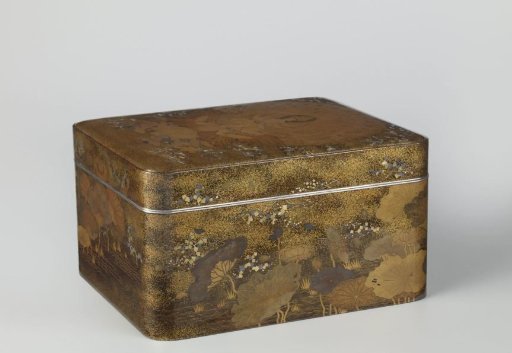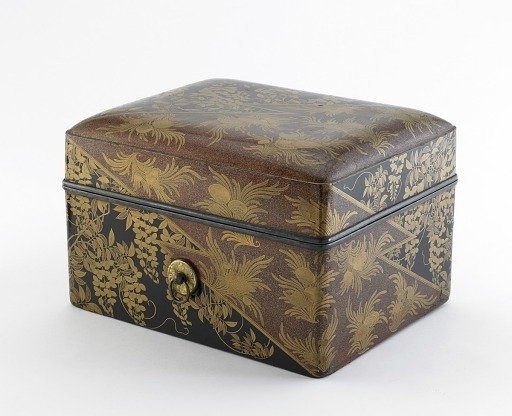
Box for personal accessories (<em>tebako</em>)
From the collection of National Museum of Asian Art (Freer/Sackler). Free to download, adapt and use — no permission needed.
Tebako were portable boxes that usually held sets of smaller, similarly decorated boxes that would contain a woman's toiletries, combs, mirrors and other personal items. The striking decorative style of this example is known as Kodaiji maki-e, named after the mortuary temple in Kyoto dedicated to the memory of the powerful warrior Toyotomi Hideyoshi (1537-1598). Professional lacquerers of the Koami school, who were commissioned to produce the architectural decoration and objects for the Kodaiji, employed distinctive designs featuring relatively flat, large-scale motifs simply delineated in fine gold powder in the technique termed maki-e and reddish gold-flecked technique known as nashiji.
National Museum of Asian Art (Freer/Sackler)’s own description