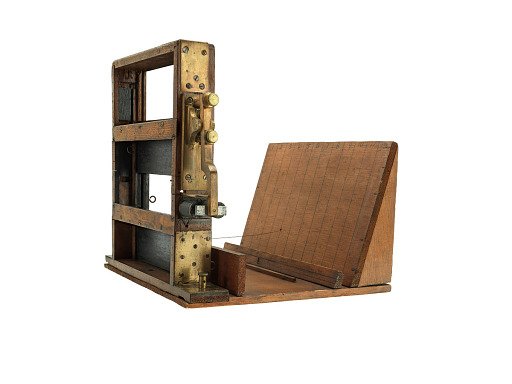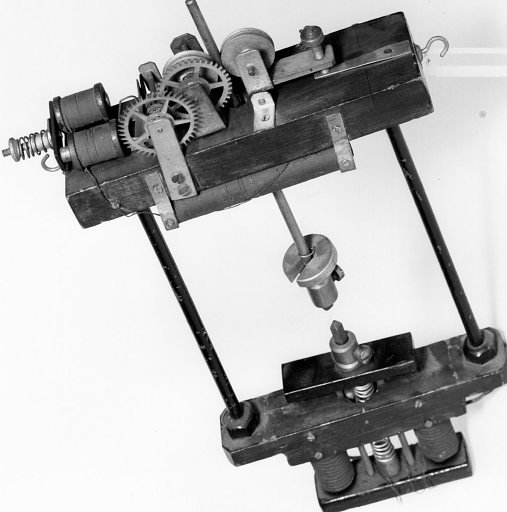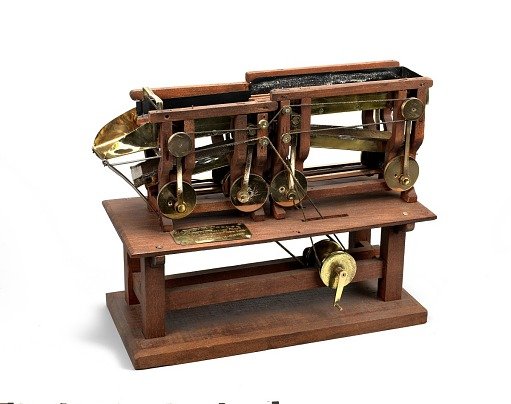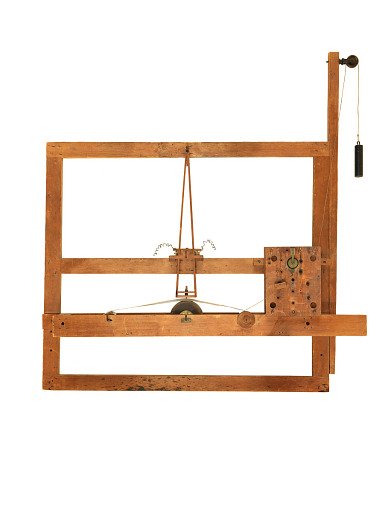
Morse "Canvas-stretcher" telegraph receiver
From the collection of National Museum of American History. Free to download, adapt and use — no permission needed.
This is Samuel F. B. Morse’s prototype telegraph receiver made in 1837. Morse (1791-1872), a painter of modest renown, reinvented himself by becoming an inventor. At age 41, returning from an art sojourn in Europe, Morse conceived of a way to send electric signals over a single wire: the telegraph. With the assistance of machinist Alfred Vail and others, Morse refined his ideas and made this proof-of-concept telegraph receiver using an artist’s canvas stretcher. After several years of refinements, Morse and Vail sent the famous message “What Hath God Wrought” over a line between Washington, DC and Baltimore, Maryland. Adopted by news organizations, the military, and railroads, the almost instantaneous nature of telegraphs revolutionized communications and helped create a sense of nationhood. Eventually ordinary people (if they could afford the fee) could send fast messages called telegrams to friends and family anywhere in the country.
National Museum of American History’s own description