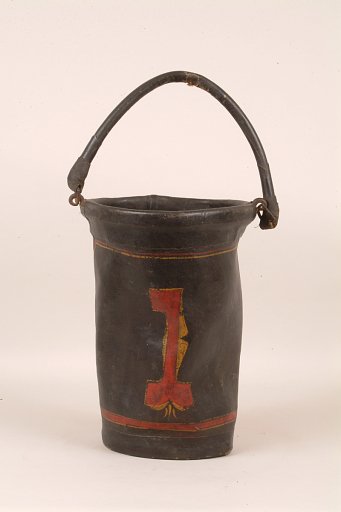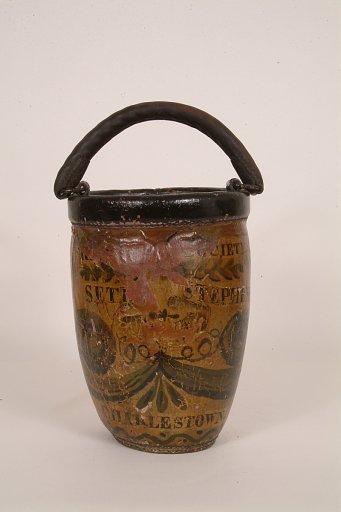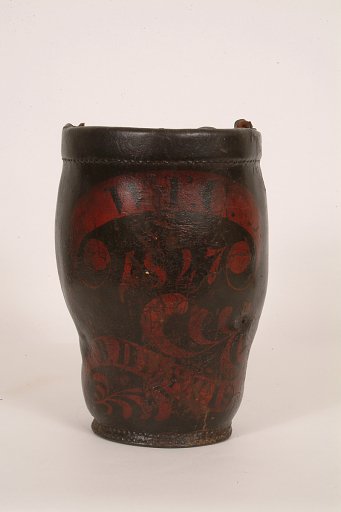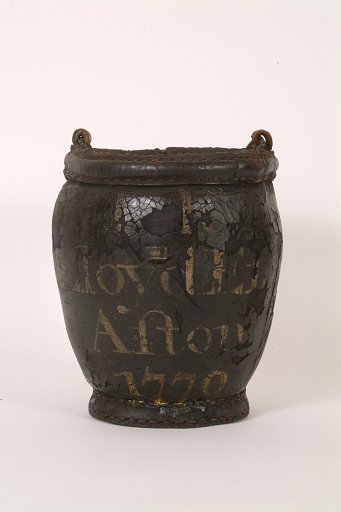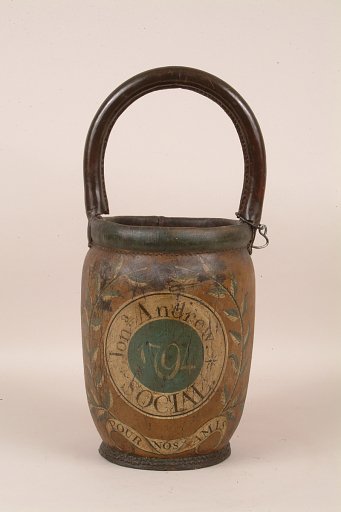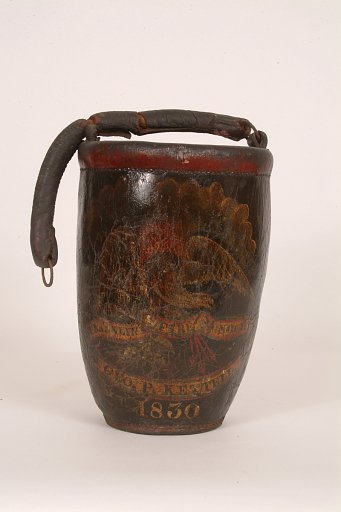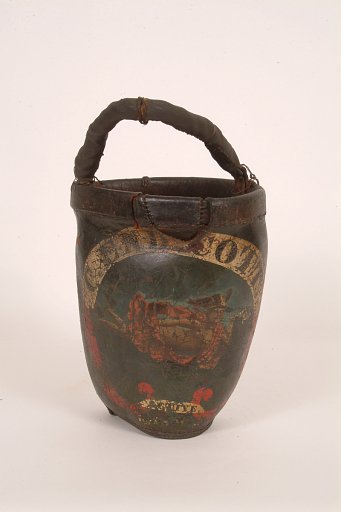
Fire Bucket, "C. Endicott "
From the collection of National Museum of American History. Free to download, adapt and use — no permission needed.
This nineteenth-century bucket is market with the owner’s name, C. Endicott, and the word “active.” “Active” most likely signified that Endicott was an active firefighter. Beginning in the 1830s, fire companies introduced new membership strategies that distinguished between different types of service. There were three grades of membership: active, honorary, and contributing. Active members performed the actual work of extinguishing fires, and sometimes paid minimal dues. Honorary members were so called because they had performed notable active service. They had the right, but were not obligated, to attend fires. Contributing members were members in name, but did not have to perform physical labor. They instead paid heavy dues, financing engine decorations and the acquisition of new technology, and were allowed to participate in parades and company functions. Over the course of the nineteenth century, the proportion of non-active firefighters steadily increased. The introduction of these three grades of service significantly changed notions of volunteer firefighting. Rather than a civic duty performed by all members of the community, the hard labor of firefighting became the duty of fewer and fewer men, those with a taste for danger or those who could not buy their way out. The owner of this bucket was evidently proud of the fact that he performed active service, and marked his equipment accordingly.
National Museum of American History’s own description