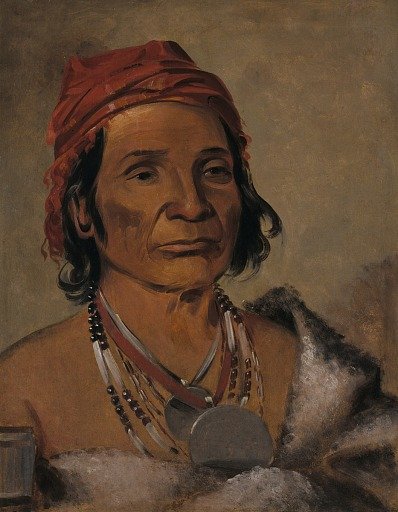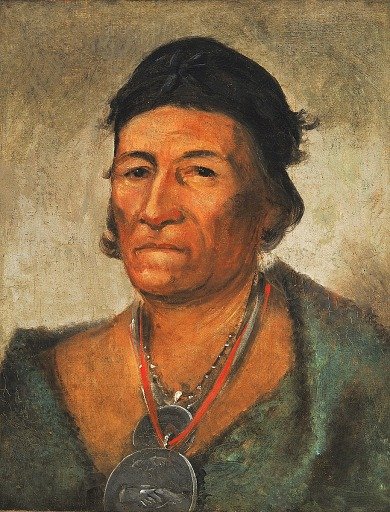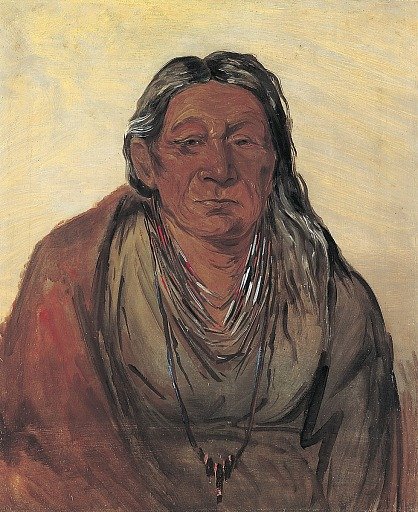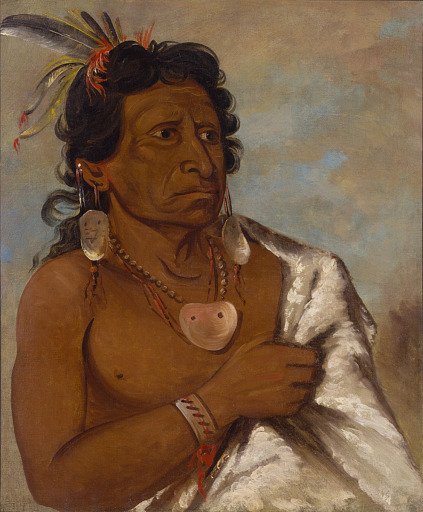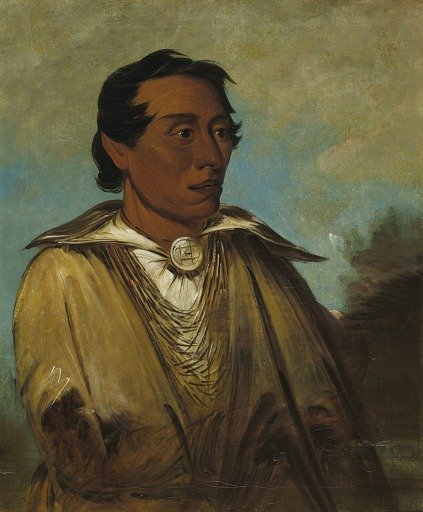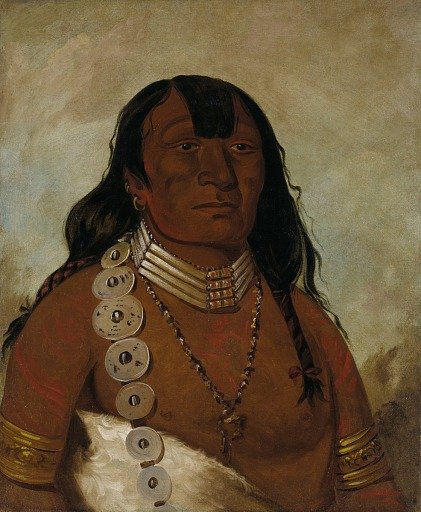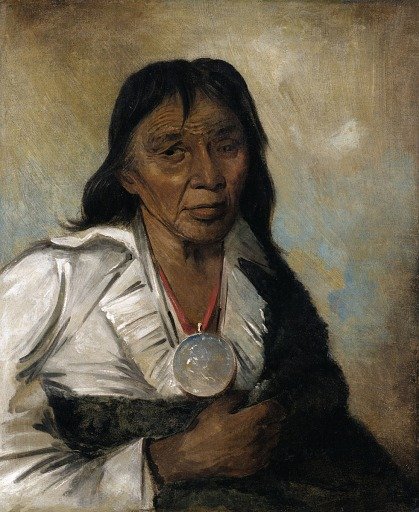
Shin-gós-se-moon, Big Sail, a Chief
From the collection of Smithsonian American Art Museum. Free to download, adapt and use — no permission needed.
From 1830 to 1836, George Catlin traveled the American West to document Native Americans and their customs, and his ambition was to capture Plains Indians untouched by the effects of civilization. But by 1836, the year he painted this portrait of Big Sail, Catlin understood that civilization was indeed encroaching on the “natural man” he hoped to document. Catlin probably painted the Ottawa chief at Mackinac, an island in Lake Huron where a remnant of the tribe remained. He described Big Sail as “blind in one eye,” and thought the “effects of whiskey and civilization . . . plainly discernible in this instance.” (Catlin, 1848 Catalogue, Catlin’s Indian Gallery, SAAM online exhibition; Truettner, The Natural Man Observed, 1979)
Smithsonian American Art Museum’s own description