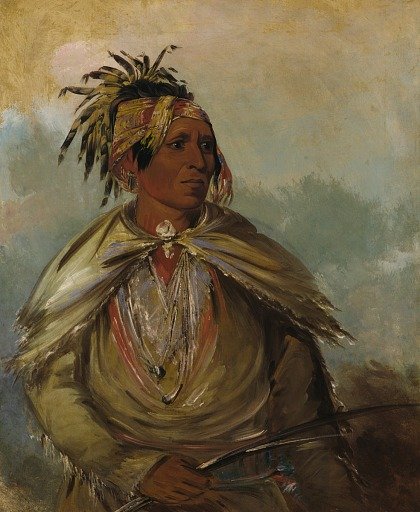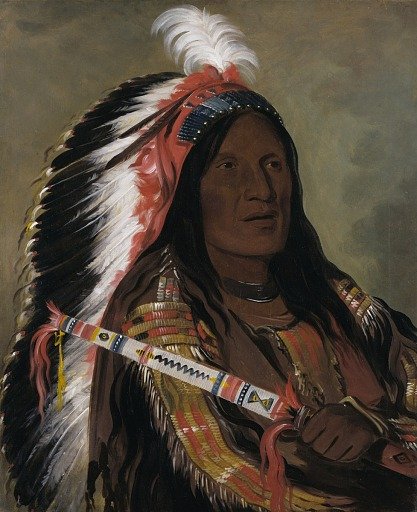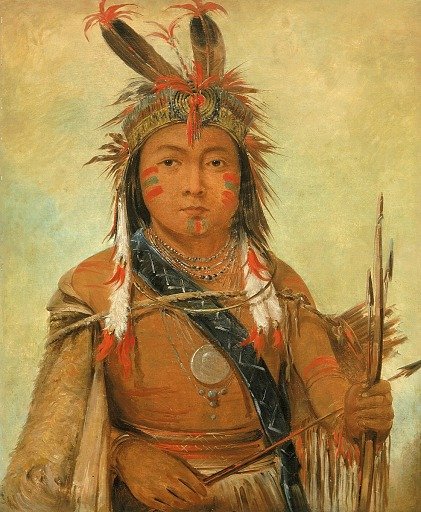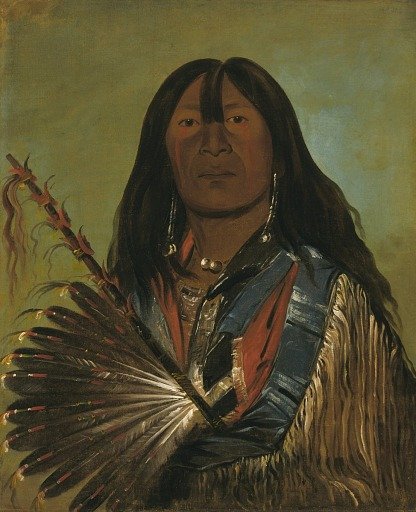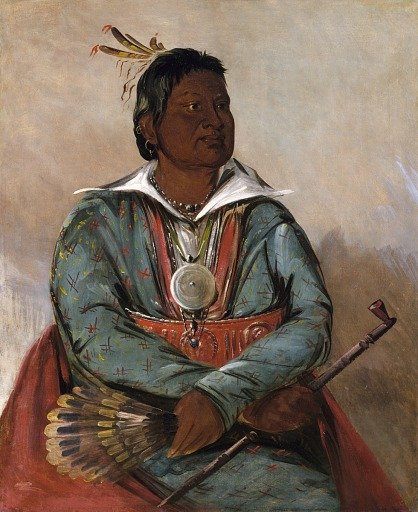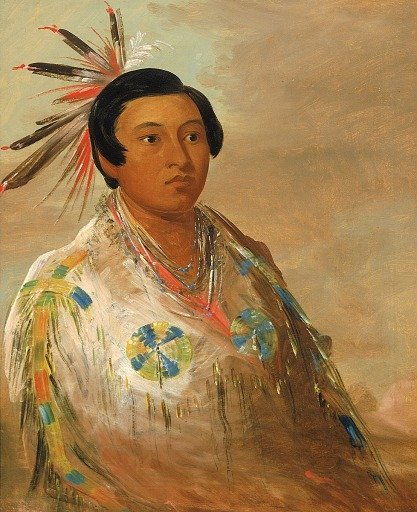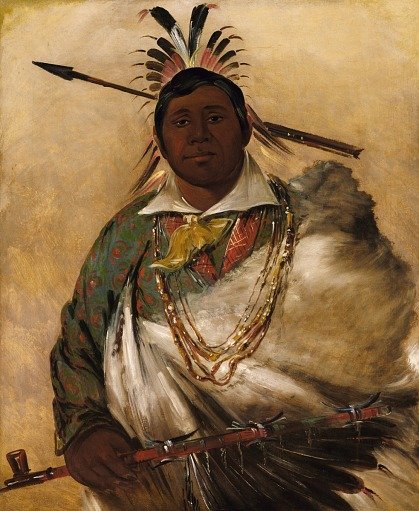
Téh-ke-néh-kee, Black Coat, a Chief
From the collection of Smithsonian American Art Museum. Free to download, adapt and use — no permission needed.
“THE CHER-O-KEES. Living in the vicinity of, and about Fort Gibson, on the Arkansas, and 700 miles west of the Mississippi river, are a third part or more of the once very numerous and powerful tribe who inhabited and still inhabit, a considerable part of the state of Georgia, and under a Treaty made with the United States Government, have been removed to those regions, where they are settled on a fine tract of country; and having advanced somewhat in the arts and agriculture before they started, are now found to be mostly living well, cultivating their fields of corn and other crops, which they raise with great success.” George Catlin painted Black Coat at Fort Gibson, Arkansas Territory, in 1834. (Catlin, Letters and Notes, vol. 2, no. 49, 1841; reprint 1973)
Smithsonian American Art Museum’s own description